The Quiet Revolution in E-Commerce Video: How Small Brands Are Winning With AI-Generated UGC
Discover how small e-commerce brands are using AI-generated UGC videos to scale content creation, improve ad testing, localize campaigns, and boost video marketing performance.

A case study perspective from a SaaS marketer embedded in the D2C space.
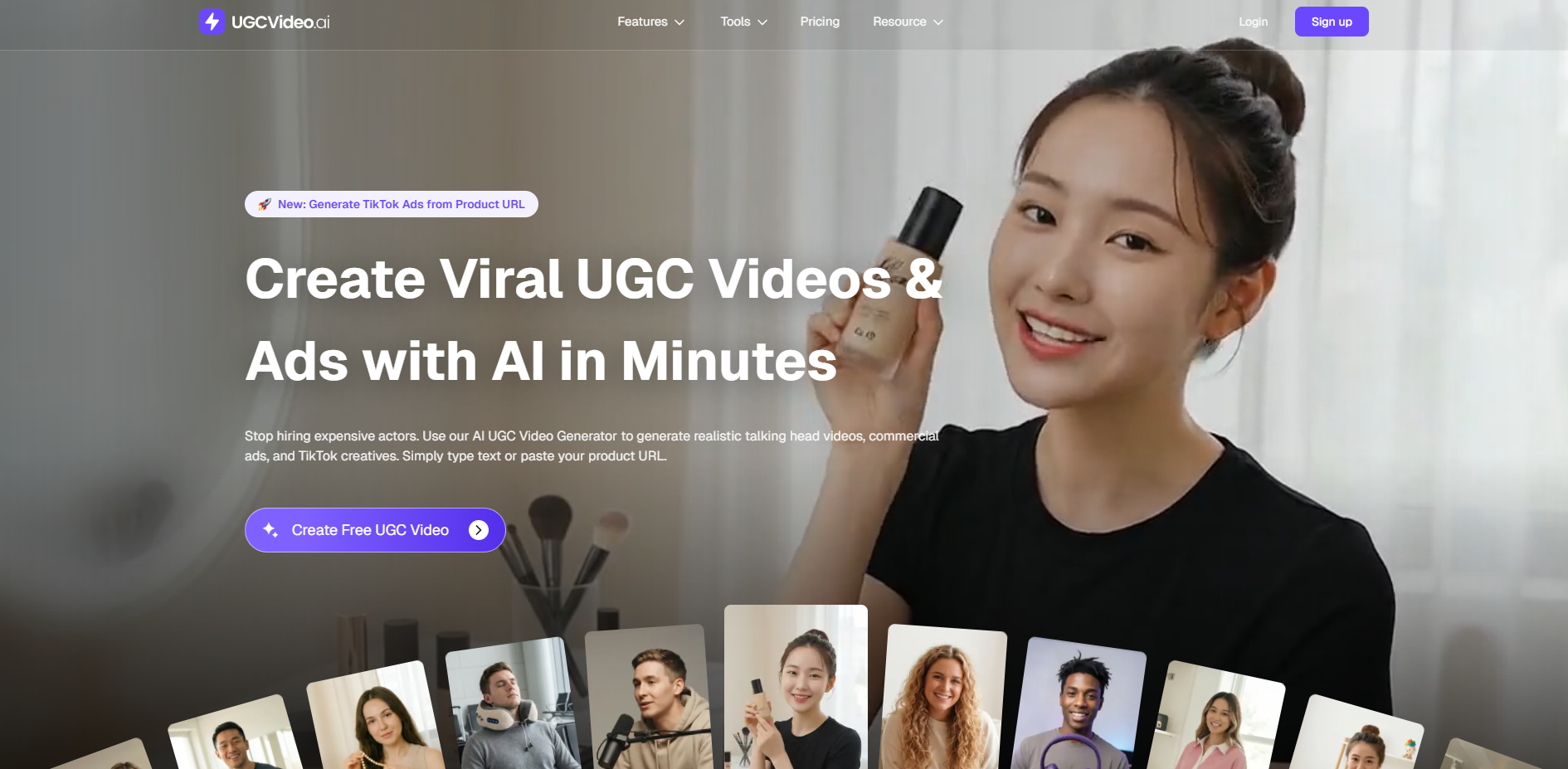
Most conversations about AI video tools focus on the technology itself — what models power it, how realistic the avatars look, whether the lip-sync is convincing. That's understandable. But it misses the more interesting story: what actually happens to a business when it starts using these tools consistently?
Over the past several months, I've been tracking how a handful of small D2C brands have integrated AI-generated video into their content pipelines. The results aren't uniform, but the patterns are revealing. And one tool keeps coming up in those conversations: UGCVideo.ai.
The Problem That Wasn't Supposed to Exist Anymore
Small Brands Still Can't Afford Real UGC at Scale
There's a persistent myth in e-commerce marketing that UGC is "free" because users generate it organically. For established brands with large, loyal customer bases, that's partially true. For a brand doing $500K to $2M in annual revenue — the sweet spot of the D2C middle market — organic UGC is sporadic, inconsistent, and rarely production-ready.
The alternative is paid creator partnerships. But those come with their own friction: negotiation time, usage rights, revision cycles, and a per-video cost that makes high-volume creative testing economically impossible. A brand that wants to test 15 different ad hooks across three product lines is looking at a significant budget just to generate raw material.
This is the gap that AI video generation is filling — not for enterprise brands with dedicated creative teams, but for the scrappy operators who are making real business decisions with limited resources.
Why Video Specifically
According to Wyzowl's 2025 State of Video Marketing report, 91% of consumers say they want to see more video content from brands. More pointedly, 82% of people report being convinced to buy a product after watching a brand video. Those numbers have been climbing for years, and they show no sign of plateauing.
For small brands, the math is simple: video works, but producing enough of it is hard. Something has to give.
Three Brands, Three Different Use Cases
Case One: The Supplement Brand Testing Ad Hooks
A small sports nutrition brand — four full-time employees, primarily selling through their own Shopify store and Amazon — had a specific problem. Their best-performing ad creative was a 28-second UGC-style clip filmed by one of their founders. It ran for eight months before fatiguing. When they tried to replicate it with a paid creator, the results were flat.
They started using an AI UGC Video Generator to produce variations on the original concept: same product, same core message, but different avatar, different hook, different opening line. Within six weeks of testing, they had identified two new winning creatives that outperformed their original clip on return on ad spend.
The key insight from their experience: the AI tool didn't replace the creative thinking. It removed the production bottleneck that had been preventing them from testing ideas fast enough.
Case Two: The Skincare Brand Solving the Localization Problem
A skincare brand with ambitions to expand into the German and French markets faced a familiar challenge. Producing localized video content traditionally meant either hiring creators in each market or dubbing existing English content — both expensive, both slow.
They used UGCVideo.ai to generate product explanation videos in multiple languages, with region-appropriate avatars and localized scripts. The production time dropped from several weeks per market to a matter of days. More importantly, the content felt native rather than translated — a distinction that audiences in non-English markets are particularly sensitive to.
This use case doesn't get discussed enough in the AI video conversation. Localization isn't glamorous, but it's one of the highest-leverage applications for this kind of tool.
Case Three: The Home Goods Brand Building a Content Library
The third brand I tracked had a different goal entirely. They weren't primarily focused on paid advertising — they were trying to build a library of product content for their website, email campaigns, and organic social channels. Their problem was volume: dozens of SKUs, each needing multiple content formats, and a two-person marketing team.
They approached UGCVideo.ai as a content production system rather than an ad creative tool. Over three months, they built out video content for their entire product catalog — something that would have taken a year with traditional production methods. The videos weren't cinematic. They weren't trying to be. They were clear, informative, and consistent in quality — exactly what product pages and email sequences need.
What These Cases Actually Prove
Speed Changes Strategy, Not Just Tactics
The most consistent theme across all three brands wasn't cost savings or quality improvement — it was the strategic shift that comes from removing production constraints. When generating a new video takes hours instead of weeks, teams start making different decisions.
They test more. They iterate faster. They stop treating each piece of content as a precious, high-stakes asset and start treating creative development as an ongoing experiment. That mindset shift is arguably more valuable than any individual video the tool produces.
The "Good Enough" Threshold Is Lower Than You Think
There's an assumption in marketing that higher production quality always correlates with better performance. The data from performance advertising consistently challenges this. Audiences on social platforms have developed a strong preference for content that feels authentic over content that looks expensive. A well-scripted video with a natural-feeling AI avatar frequently outperforms a glossy studio production in direct response contexts.
This doesn't mean quality is irrelevant. It means the type of quality that matters has shifted. Clarity, pacing, and relevance matter more than lighting and camera resolution.
Where Human Judgment Remains Non-Negotiable
None of these brands eliminated human creative input. What they eliminated was the production execution that was consuming most of their creative team's time. The strategic decisions — which products to feature, what message to lead with, which audience segment to target — still required human judgment.
The brands that got the most value from AI ugc video tools were the ones that understood this distinction clearly. They used the technology to execute faster, not to think less.
A Practical Framework for Getting Started
Start With Your Highest-Volume Need
Don't begin with your flagship campaign. Begin with the content type you need most of and produce least consistently — product explainers, FAQ videos, retargeting ads. These are low-stakes enough to experiment with and high-volume enough that efficiency gains are immediately visible.
Invest in the Script Before the Tool
Every brand I spoke with said the same thing: the script determines the output quality more than any platform setting. Write conversationally. Use the language your customers actually use. Build natural pauses into the structure. The AI execution layer rewards good input.
Measure What Actually Matters
Don't evaluate AI-generated video by comparing it to your best-ever creative. Evaluate it against the content you weren't producing before — the variations you never tested, the markets you never localized for, the product pages that still have no video. The right comparison isn't "is this as good as our top performer?" It's "is this better than nothing?"
For most small brands, the answer is clearly yes.
The Bigger Shift
What these case studies point to isn't just a useful tool. They point to a structural change in what's possible for resource-constrained marketing teams. The gap between what large brands can produce and what small brands can produce is narrowing — not because the tools are identical, but because the output quality threshold for effective content marketing is more accessible than it's ever been.
UGCVideo.ai is one piece of that infrastructure. For the brands paying attention, it's already making a measurable difference.
Read Also: How To Use Social Media For E-Commerce 2026 Guide
🔥 Limited Time Deal
NewGet lifetime access to Postunreel with a one-time payment. Never pay again!
Your Go-To Solution for Stunning Carousels using AI!
Postunreel is a free AI carousel generator tool that helps you design captivating carousel posts for LinkedIn, Instagram, and other platforms. It makes it easier to increase social media engagement and grow your audience.
Create Free Carousel Now 🚀Related Blogs
Free AI Video Maker: 5 Tools That Actually Work in 2026
Free AI video maker guide: real daily credits, watermark rules and clip limits for Google Flow, Kling, Pika and more. Pick the right tool fast.
The Modern Business Survival Guide: Preparing for the Problems You Can Not Predict
Learn how to build business resilience with practical strategies for managing unexpected problems, protecting communication, diversifying revenue, and preparing your team for disruptions.
How to Change Instagram Story Background Color
See how to change Instagram story background color on iPhone and Android. Try 4 easy, free methods: solid fills, gradients and color tints.