From Attention to Action: How Brands Use Social Proof to Convert
Learn how social proof marketing turns website visitors into customers using testimonials, video reviews, user-generated content, expert endorsements, and case studies that build trust and drive conversions.
The hard truth about your website is that most people who land on it don’t trust its message. They’ve been burned by decorated product descriptions before, and they have no reason to trust a brand they don’t know.
So when they arrive, they’re not really reading your claims. They are scanning for proof that you’re not going to waste their time or money.
We can call this skepticism, or we can call it self-preservation. Either way, it’s the default state of the modern buyer. They’ve learned that what a brand says about itself is often just noise. On the other hand, what a stranger says in a review carries weight.
That hunch in who we trust has changed the game.
Before, marketing used to be all about the brand sending a message out. Now, it’s about the brand facilitating conversations between customers. The goal is no longer just to grab attention with a loud voice, but to create an environment where your existing customers do the talking for you. When that happens, attention turns into action without a hard sell in sight.
Read on to learn how that works in practice.
Testimonials That Resolve Doubt
There’s a reason brands dedicate entire pages to what their customers say. 92% of consumers globally trust peer recommendations over anything a brand says about itself. That’s a fundamental indication showing where trust actually comes from.
The problem is that most brands treat testimonials as decoration. They pick the most flattering quotes, strip out any specificity, and place them somewhere on the homepage where they blend into the background. The result feels polished but hollow.
The testimonials that actually convert are specific. They name the problem the customer had before, describe what changed, and reflect the language real people use, not marketing copy. “It saved us time” converts worse than “We recovered $40,000 in tax savings we didn’t know we were leaving on the table.” One feels generic. The other feels true.
Here’s how to put this into practice:
Collect feedback through post-purchase emails, follow-up calls, or review platforms.
Then resist the urge to edit out the rough edges. Specificity and authenticity do more work than polish.
Place testimonials near decision points, like pricing pages, service descriptions, or checkout flows. That’s where doubt tends to creep in.
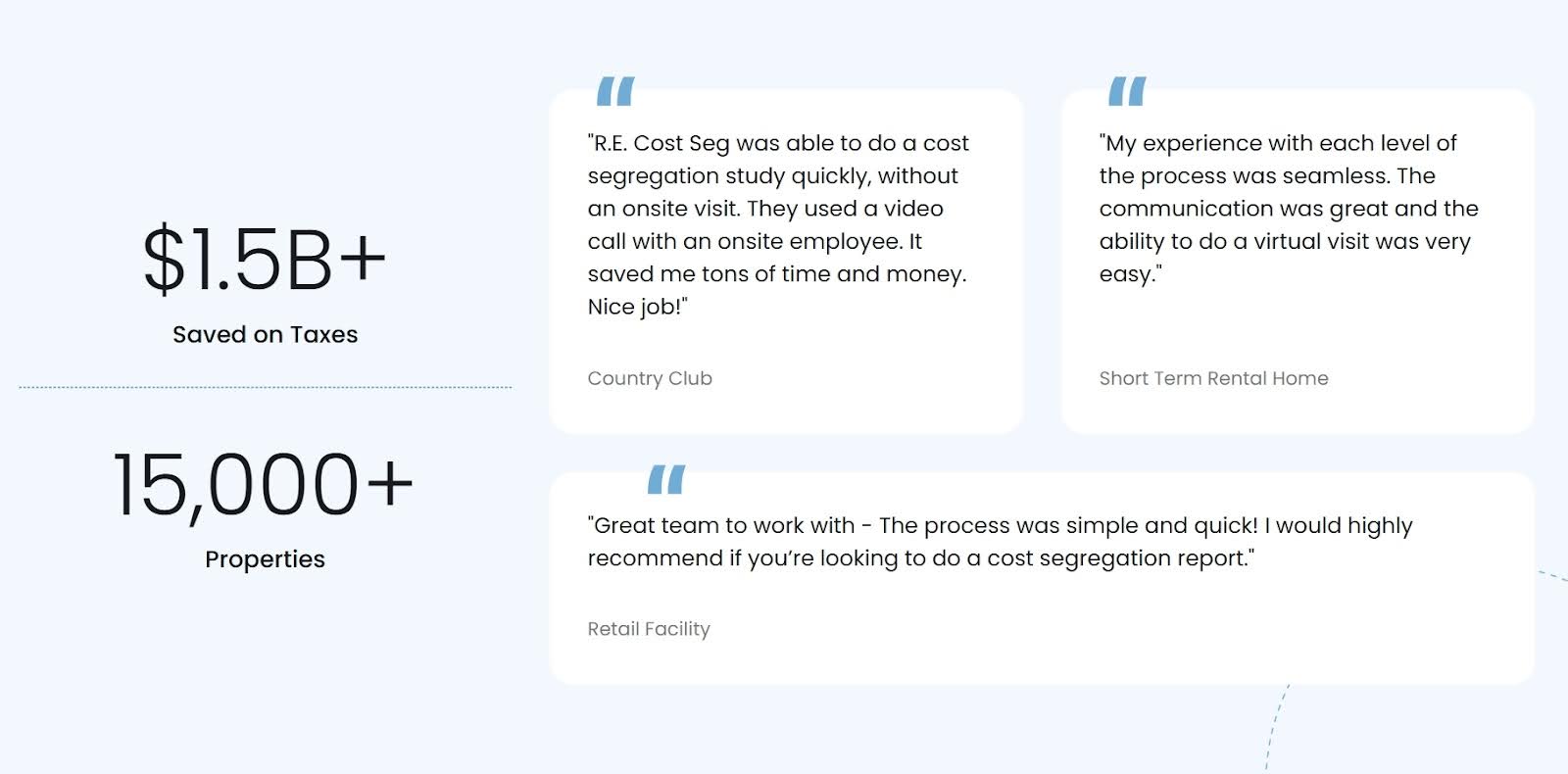
A good example of this approach in action is R.E. Cost Seg, a firm that helps real estate owners reduce tax liability through cost segregation studies.
Their website surfaces client feedback throughout, not just on a dedicated testimonials page. Visitors encounter real clients speaking in their own words at multiple points in the browsing experience. Nothing reads like it was written by a marketing team.
That consistency of genuine voices showing up across the site signals credibility in a way that branded claims simply can’t replicate. It tells prospective clients that results here are repeatable, not exceptional.
Source: recostseg.com
On-Camera Proof That Moves Decisions Forward
Written testimonials do a lot of heavy lifting. But there’s something a block of text can’t replicate. That’s watching a real person talk about their experience. Their tone, their expression, and the way they pause before saying “it actually worked” register in a way words on a screen don’t.
The numbers reflect this. 85% of people say a video convinced them to buy a product or service at some point. That’s a significant portion of your audience that responds more to someone talking than to someone writing.
In a landscape where attention is short and skepticism is high, video gives you a credibility signal that’s much harder to fake.
Here’s how to put this into practice:
The key is authenticity over production value. Feature a real person, speaking candidly, with enough specificity that viewers recognize the experience as genuine.
A well-lit, heavily scripted video from a customer who sounds like they’re reading off a teleprompter won’t move anyone.
Keep the video under two minutes.
Place it where hesitation lives, such as near pricing, on landing pages, or at the top of a service page.
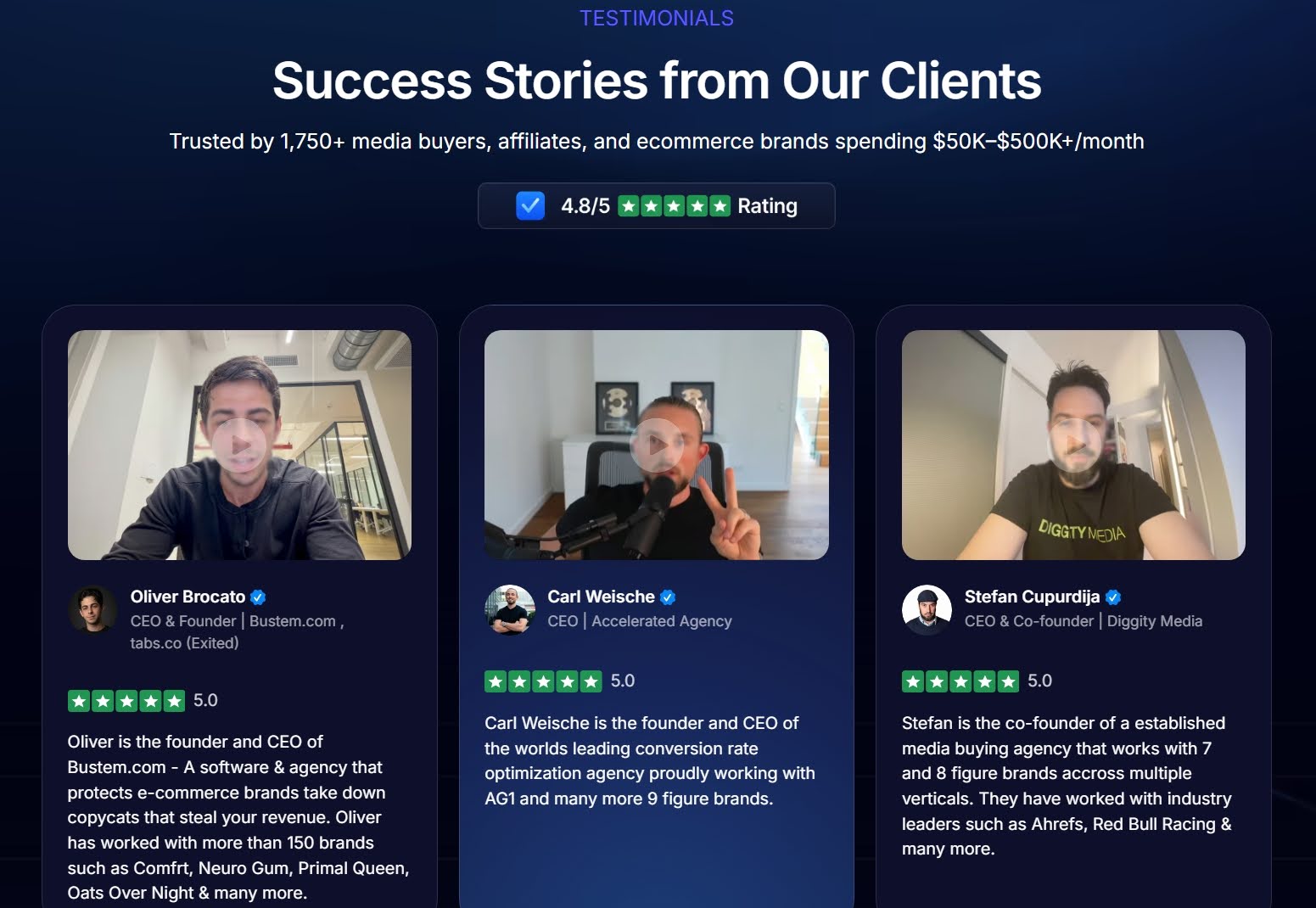
Uproas, a company that provides premium advertising accounts on platforms like Google, Meta, and TikTok for agencies and brands, puts this into practice on their homepage.
They feature video testimonials from CEOs who’ve used their service. These are real executives, speaking directly to the camera, and explaining what they got and why it worked. There’s no narrator, no flashy editing, and no ambient music trying to set a mood.
The restraint to overproduce these videos is precisely what makes them achieve their purpose. Visitors see decision-makers they can relate to vouching for a service with specifics, not slogans.
Source: uproas.io
Everyday Customer Posts That Confirm Real Use
Brands spend significant budgets producing content that tries to show how their product fits into real life. Their customers are already doing it for free and with more conviction.
User-generated content (UGC) is any content created by customers rather than the brand itself. Photos, videos, reviews, and social posts add a credibility weight that branded content struggles to match because it comes without an agenda.
When someone posts about a product they genuinely like, there’s no incentive behind it. That absence of incentive is exactly what makes it persuasive.
Here’s how to put this into practice:
Ask customers to share their experience after purchase.
Create a branded hashtag and actually promote it.
Feature customer content on your website and social channels. People are more likely to share when they know there’s a chance their content gets spotlighted.
For product-based businesses, consider including a small insert in packaging that encourages customers to tag you.
Respond to posts when customers do share. That interaction signals to others that the brand pays attention.
When you collect UGC for your website, don’t separate it too far from your testimonials. The combination of a genuine quote and a real photo of someone using the product in an everyday context hits differently than either element alone.
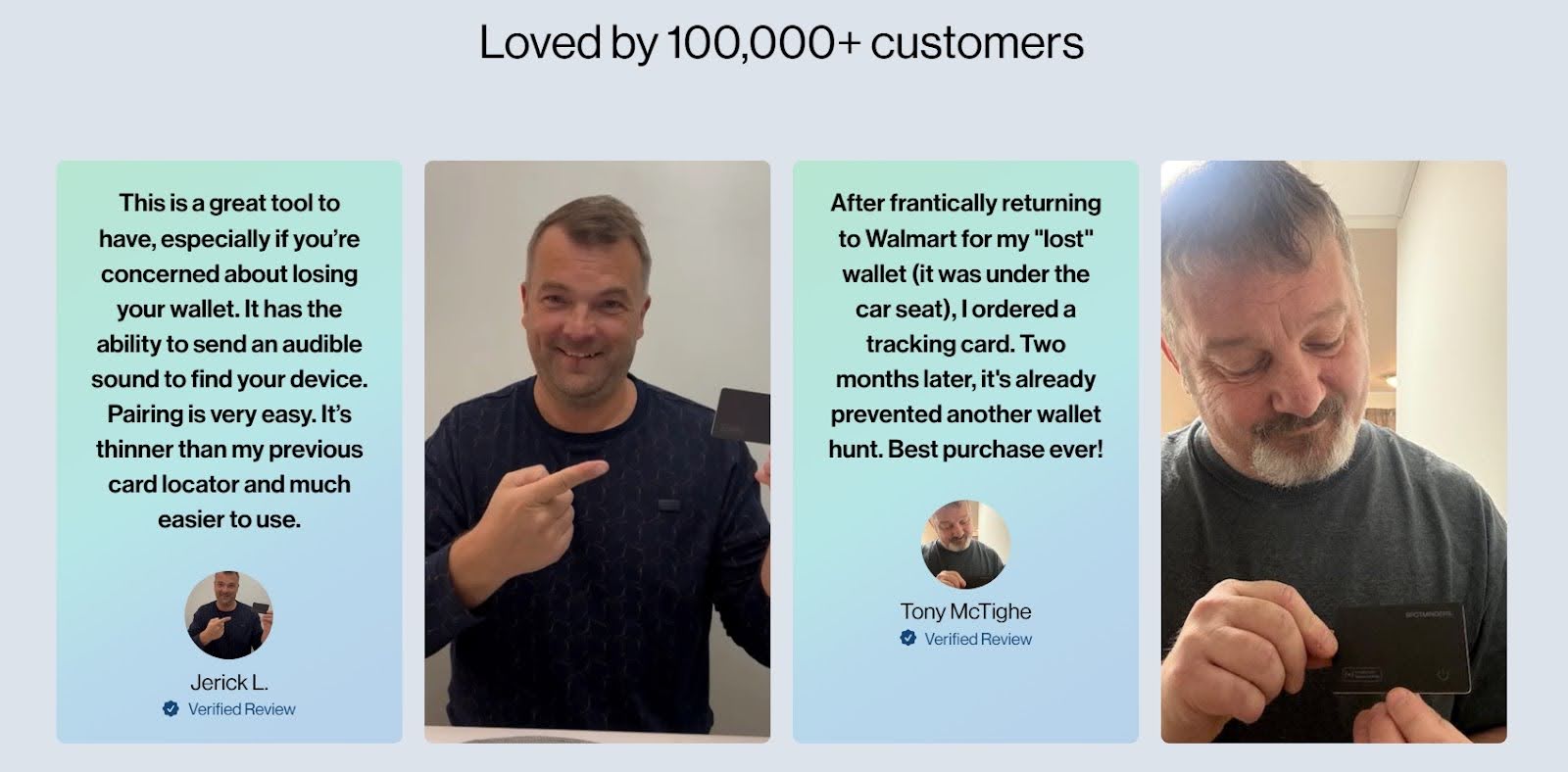
Spotminders, a company behind thin tracking devices designed to clip onto wallets and bags, is very clever with this approach.
Their website features customer testimonials written in their customers’ own words, paired with actual photos of those customers using the product.
That pairing closes a gap that text alone leaves open. Visitors can now read that the product works and see it, on a real person and in a real context.
Source: spotminders.com
Expert Voices That Validate the Choice
There’s a reason medical brands put doctors in their ads and finance platforms quote economists. When someone with established credentials vouches for a product or service, it shortcuts the skepticism that most buyers carry into a purchase decision.
Expert endorsements work differently from customer testimonials. Customers speak to their personal experience. Experts speak to legitimacy. That distinction matters depending on where your audience is in the decision process.
For categories where trust is a significant barrier (like legal services, financial products, healthcare, or professional tools), an expert co-signing your brand can move people who testimonials alone won’t.
Here’s how to put this into practice:
Finding the right endorser matters more than finding a famous one. Relevance beats reach here. A well-known figure in your specific industry carries more weight with your audience than a broadly recognizable name who has no obvious connection to what you do.
Reach out to credible voices in your niche. These can be researchers, practitioners, founders, or licensed professionals.
Give them genuine access to your product or service before asking for anything. An endorsement that’s clearly informed is far more persuasive than one that reads like a transaction.
Display endorsements prominently, with full context.
Include their name, title, credentials, and ideally a direct quote that speaks to something specific about your offer.
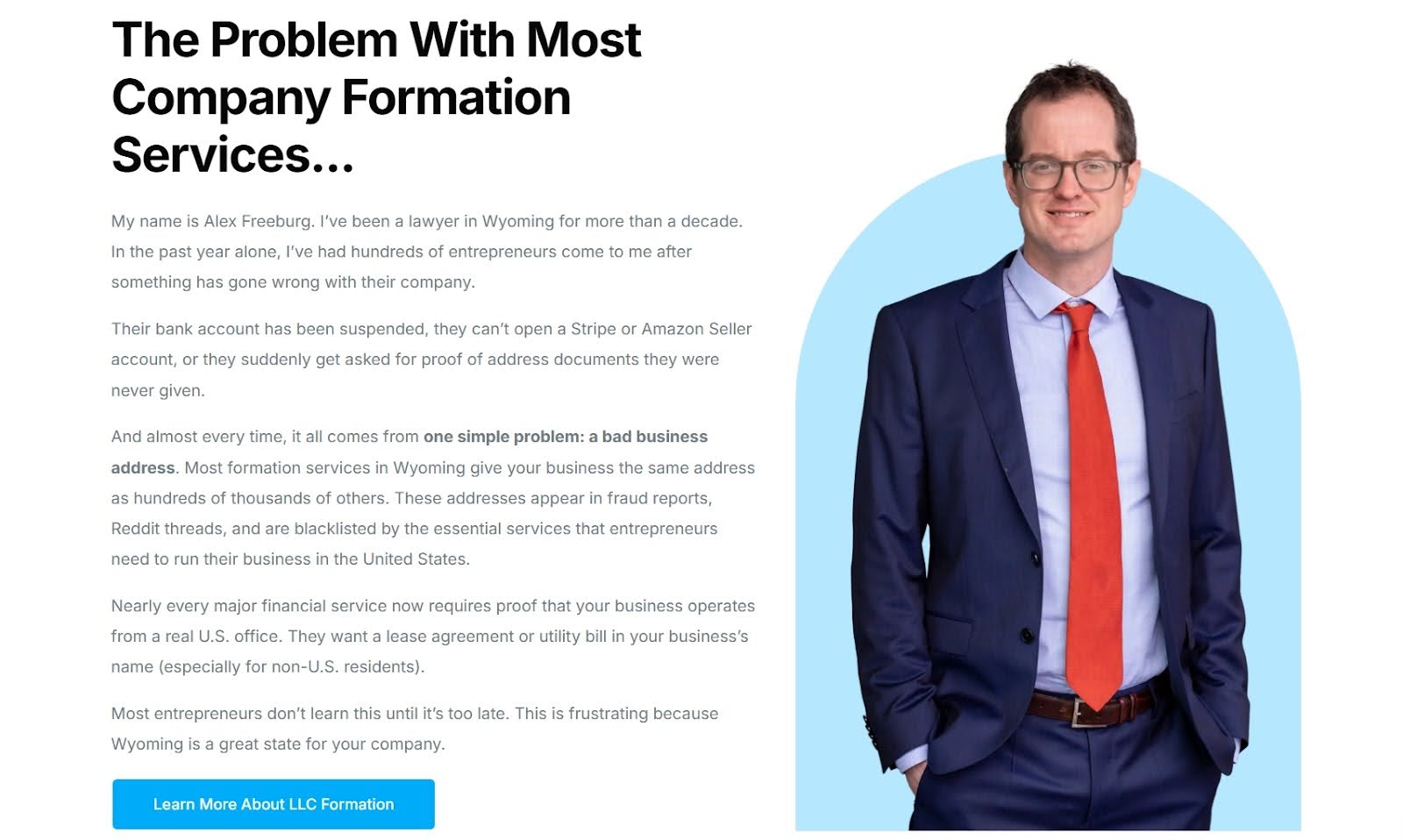
Start in Wyoming, a service that helps entrepreneurs form LLCs and maintain registered agent compliance in Wyoming, features an endorsement from an established lawyer and business founder.
That combination (legal expertise and firsthand entrepreneurial experience) speaks directly to the concerns of their target audience. It tells prospective clients that someone who understands both the legal and business side stands behind this service.
Source: startinwyoming.com
Case Studies That Prove Real Outcomes
Testimonials tell people your product worked. Case studies show them how.
That distinction is what makes them particularly effective further down the funnel, when a prospect is seriously considering a purchase and needs more than a five-star rating to feel confident.
More than 62% of marketers identify case studies as a top lead-generation tool. That makes sense when you realize that by the time someone reads a case study, they’re already interested. What they’re looking for is evidence that your solution works for someone in a situation similar to theirs.
Here’s how to put this into practice:
Establish the problem the client had, describe what changed after using your product or service, and back it up with specific numbers.
Vague success stories don’t do much. “We improved our workflow” is forgettable. “We cut project approval time by 40% in the first month” gives a reader something concrete to hold onto.
Include direct quotes from real people at the client company. Name their role and let the specificity do the persuading.
You don’t need dozens of case studies. A handful that cover different industries, company sizes, or use cases will serve most audiences.
Surface short excerpts on high-traffic pages and link to the full version for readers who want more detail.
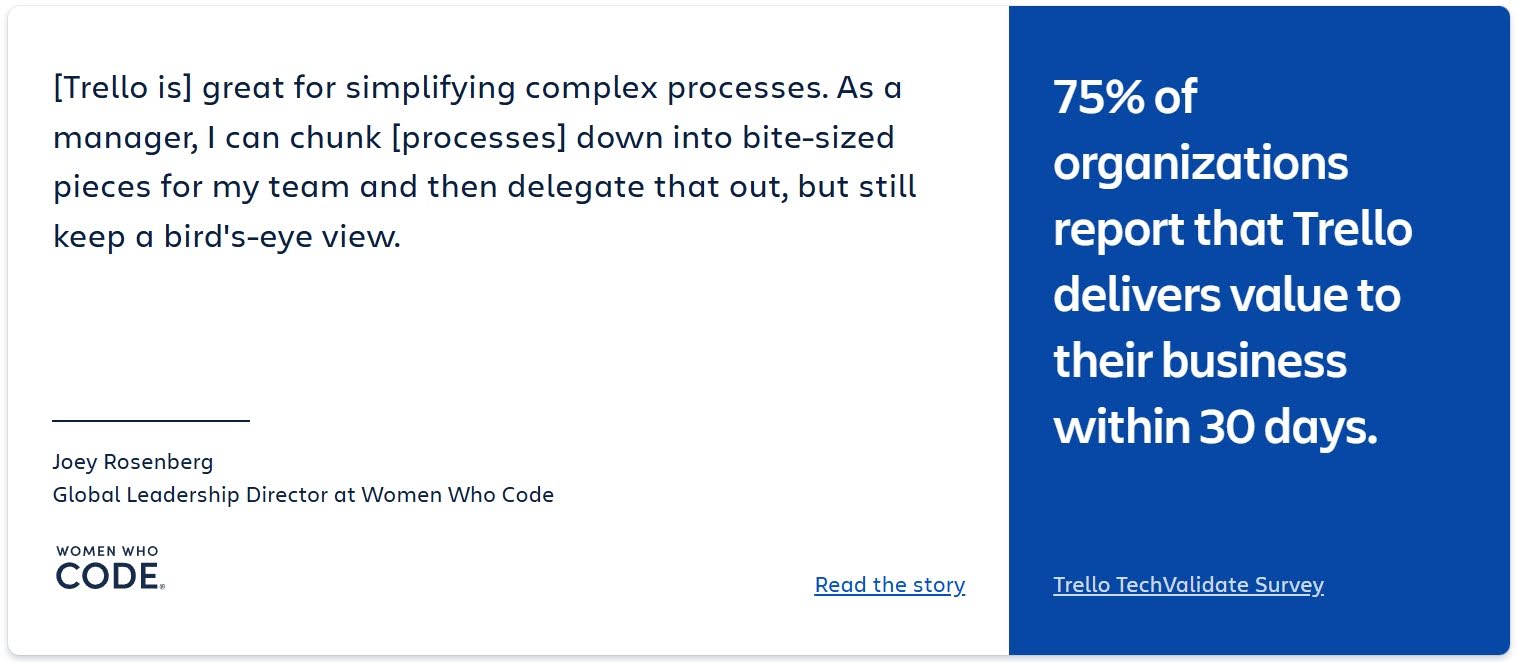
Trello, a visual platform built around organizing tasks and keeping teams aligned, does this well. Their homepage features excerpts from detailed case studies spanning startups to large enterprises.
Each excerpt leads with what a specific client found valuable, includes a direct quote from someone at that company, and anchors the story with concrete metrics around efficiency or time saved. Additionally, every excerpt links to the full case study.
This is a structure that gives skeptical visitors enough to trust and curious ones enough to go deeper.
Source: trello.com
Final Thoughts
Social proof works best when it supports real decisions. Each format plays a different role:
Testimonials reduce early hesitation.
Video adds clarity and confidence.
User-generated content confirms real use.
Expert endorsements strengthen credibility.
Case studies provide detailed evidence.
Strong brands choose the type that fits the decision in front of the customer and place it where doubts appear. They focus on clear experiences and measurable results instead of polished claims.
We recommend that you start with one section of your site where visitors tend to hesitate. Then, add proof that answers the questions people already have. Expand from there as you learn which signals move customers toward action.
🔥 Limited Time Deal
NewGet lifetime access to Postunreel with a one-time payment. Never pay again!
Your Go-To Solution for Stunning Carousels using AI!
Postunreel is a free AI carousel generator tool that helps you design captivating carousel posts for LinkedIn, Instagram, and other platforms. It makes it easier to increase social media engagement and grow your audience.
Create Free Carousel Now 🚀Related Blogs
How to Use Google Lens: Guide for Android, iPhone, and Desktop (2026)
Learn how to use Google Lens on Android, iPhone, and desktop. Follow simple steps to translate text, shop, and search with your camera in just minutes.
Report a Problem Apple: How to Request a Refund (2026 Guide)
Use Report a Problem Apple to request a refund in minutes. Follow the simple steps, track your status, and avoid fake support scams. Updated 2026.
Internet Options by Address: How to Find the Best Provider at Your Door
Find internet options by address in 3 simple steps. Check fiber, cable and 5G providers, spot map errors, and pick the right plan for your home today.