From Prompting to Co-Creation: The Evolution of Generative Art in Social Ecosystems
Explore how generative art evolved from prompting to AI co-creation, transforming social media, digital identity, and creative workflows.
As we navigate through 2026, the landscape of digital creativity has undergone a fundamental transformation. We have moved past the initial "wow factor" of text-to-image generators that defined the early 2020s, transitioning into a sophisticated era of collaborative co-creation. In this contemporary ecosystem, the line between the consumer and the creator has blurred entirely, driven by the integration of high-fidelity generative models into our daily social interactions. The democratization of high-end visual production is no longer just a technical feat; it is a cultural shift that has redefined how stories are told and how visual identities are constructed.
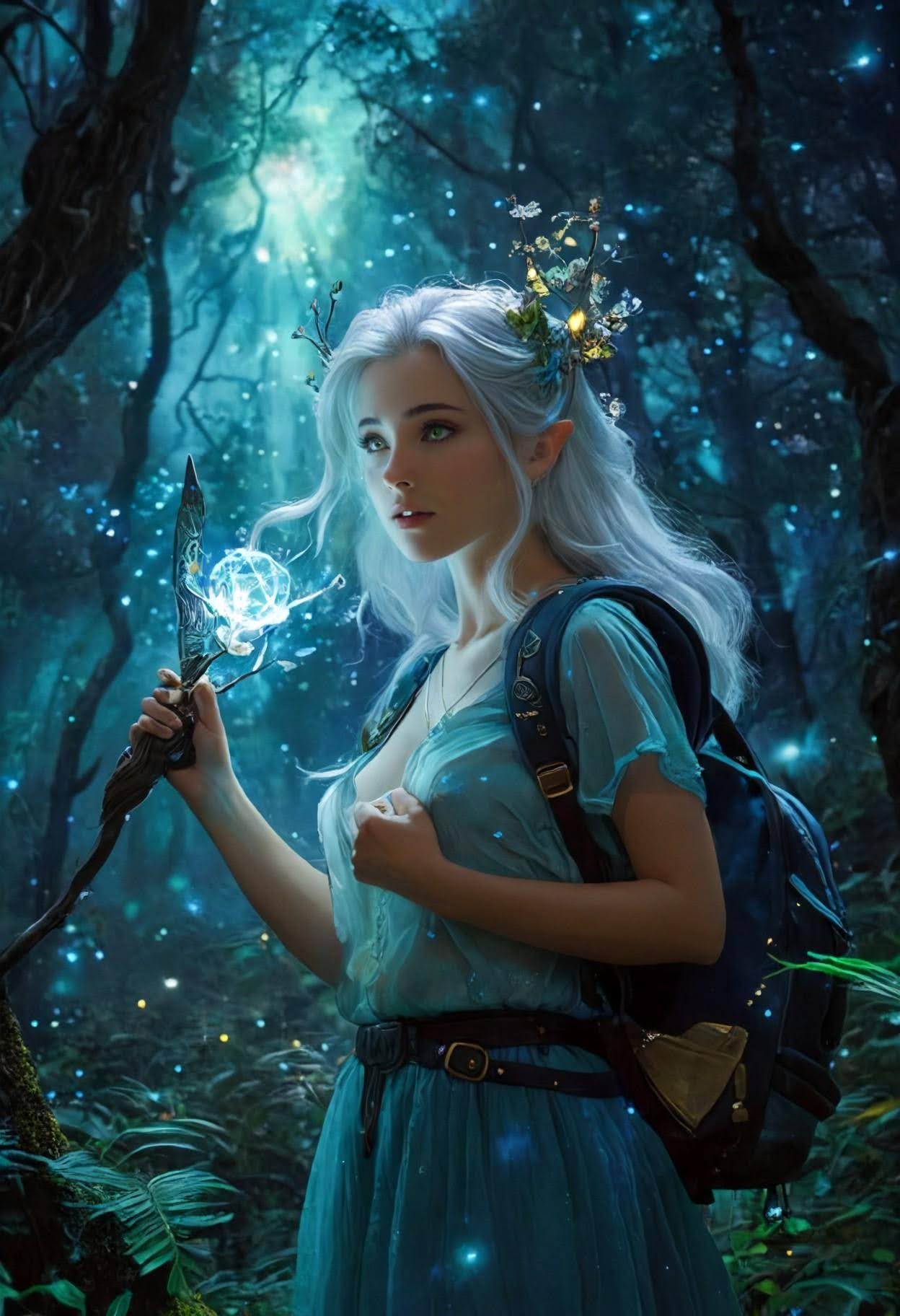
The current state of the market suggests that generative content now accounts for over 45% of all media shared on social platforms. This evolution was catalyzed by the move from static, standalone tools toward integrated environments where users don't just "prompt" an engine, but engage in a dialogue with it. By embedding sophisticated neural networks into chat interfaces and social dashboards, the industry has turned every smartphone user into a potential art director. This shift has massive implications for the creator economy, intellectual property, and the psychological ways we connect with digital personae.
To understand where we are going, we must look at the specific mechanisms that enabled this leap. We are no longer limited to simple descriptors like "a cat in a hat." Today’s systems utilize multi-modal inputs—voice, sketch, emotional sentiment, and historical context—to produce outputs that are contextually aware. The following sections explore the technological benchmarks of 2026, the socio-economic impacts of ubiquitous generative art, and the emerging paradigms of human-AI collaboration that are shaping the next decade.
The Shift from Static Prompting to Dynamic Dialogue
In the early days of generative AI, the user experience was largely transactional. A user would input a string of text, wait several seconds, and receive a set of images that might or might not hit the mark. Today, the process is conversational and iterative. Modern generative frameworks are built on "contextual persistence," meaning the AI remembers previous iterations, stylistic preferences, and specific visual assets. This allows for a creative workflow where the user can refine an image through natural language, much like an art director speaking to a concept artist.
The technology fueling this change involves advanced Diffusion Transformers (DiT) and enhanced LoRA (Low-Rank Adaptation) techniques that allow for real-time personalization. Instead of starting from scratch every time, users build upon a foundation of personal data and aesthetic presets. This evolution has moved the creative focus away from "getting the prompt right" and toward "guiding the vision." It represents a shift from a technical hurdle to a conceptual one, where the quality of the output is determined by the clarity of the user’s intent rather than their vocabulary.
Iterative Refinement: Users can modify specific elements of a generated scene without altering the entire composition, thanks to breakthroughs in semantic segmentation.
Multimodal Input: Integrating haptic feedback and eye-tracking allows creators to "point" and "feel" the textures they are generating in virtual spaces.
Real-Time Latency: The reduction in inference time to sub-second intervals has turned generation into a live performance rather than a static task.
Semantic Consistency: Early AI struggled with maintaining a character's appearance across multiple frames; modern 2026 models maintain 99% visual fidelity.
The Role of Personalization in Social Ecosystems
The most significant growth in generative art has not occurred in professional design studios, but within social platforms and companion apps. These environments leverage AI to allow users to build unique visual narratives. Whether it is creating custom avatars or generating backgrounds for virtual meetups, the AI acts as a mirror of the user’s personality. The emergence of a sophisticated AI companion platform exemplifies this trend, where the technology serves to strengthen the bond between user and interface through personalized visual feedback.
In these ecosystems, the generation of art is a form of social currency. Users are no longer just sharing photos of their real lives; they are sharing curated, dream-like visions of their aspirations and digital identities. This has led to the rise of "synthetic influencers"—personalities that exist entirely through generative media but command millions of followers. The ability to generate high-quality video and imagery on the fly allows these creators to maintain a level of engagement and aesthetic consistency that was previously impossible for a single human to achieve.
Moreover, the integration of generative tools into messaging apps has changed the way we communicate. Instead of searching for a pre-made GIF, a user can generate a bespoke visual reaction that perfectly captures an inside joke or a specific nuance of a conversation. This hyper-personalization makes interactions feel more authentic to the digital medium, decoupling the "social" aspect of the internet from the "physical reality" of the users. The result is a richer, more vibrant digital tapestry that reflects the infinite diversity of human imagination.
Ethics, Identity, and the Problem of "Deep-Fakes"
As generative art becomes indistinguishable from reality, the ethical landscape has become a primary focus for regulators and tech companies alike. In 2026, the concept of a "digital original" has become vital. Every generated image now carries invisible, blockchain-validated metadata that identifies it as AI-origin content. This "Content Credentials" standard has become mandatory across most hardware and social platforms to combat misinformation and the unauthorized use of a person's likeness.
The psychological impact of living in a world of high-fidelity synthetic media is also a subject of intense study. As we spend more time interacting with AI-generated characters that look, talk, and behave like humans, the boundary of our social circles is expanding to include non-human entities. This has led to the development of "Digital Consent" frameworks, where users must opt-in to interact with AI that mimics human behavior. Ensuring that these tools are used to enhance human connection rather than exploit emotional vulnerabilities is the primary challenge for developers in the current cycle.
Mandatary Watermarking: Technical standards (like C2PA) protect the integrity of the information ecosystem by marking AI content at the source.
Right to Likeness: New laws prevent the generation of imagery using a real person's face without a cryptographically signed contract.
Algorithmic Bias Mitigation: Constant auditing of models to ensure they do not reinforce outdated stereotypes or harmful social biases.
Verification Systems: Social media platforms now use "Proof of Humanity" badges to distinguish real individuals from AI-controlled accounts.
The Technical Backbone: Edge Computing and On-Device GenAI
One of the turning points that led us to the 2026 reality was the shift from cloud-based generation to on-device processing. Early models required massive server farms, leading to high latency and privacy concerns. The current generation of smartphones and laptops features dedicated "Neural Processing Units" (NPUs) capable of running billions of parameters locally. This move to the "edge" means that art generation is private, faster, and accessible even without an internet connection.
This technical architectural change has facilitated the "always-on" nature of generative art. Apps can now generate assets in the background, anticipating user needs based on habitual behavior. For instance, a GPS app might generate a 3D stylized representation of a destination as a user approaches it, or a fitness app might visualize a user’s progress through an ever-evolving digital trophy room. The integration is seamless, moving AI art away from being a "destination" and toward being a "feature" of every interface.
Furthermore, the optimization of models—using techniques such as quantization and pruning—has allowed high-quality video models to fit into the palm of a hand. This has democratized not just the output, but the infrastructure. Small developers can now build sophisticated visual tools without the need for multi-million dollar cloud budgets. This decentralization of power has sparked a second wave of innovation in the app economy, where niche, specialized creative tools are flourishing outside of the control of major tech conglomerates.
Educational Paradigms: Learning to Co-Create
The education system has also adapted to the generative revolution. In 2021, schools were banning AI; in 2026, they are teaching it as a core literacy. "Visual Prompting" is taught alongside traditional drawing and color theory. Students learn how to break down a visual concept into its constituent parts—composition, lighting, texture, and mood—to better communicate with generative systems. This hasn't replaced traditional art; rather, it has provided a new medium for expression that emphasizes the intellectual and conceptual aspects of creation.
Universities now offer degrees in Collaborative Media Arts, where students study the intersection of human creativity and machine logic. These programs focus on how to maintain a "human voice" in a world of automated content. They explore the history of tech-driven art movements—from the introduction of photography to the digital synthesizer—to provide context for the current generative era. The goal is to produce creators who view the AI as a powerful instrument rather than a replacement for their own vision.
Curriculum Integration: Art schools now treat AI as a "smart brush" that assists with perspective and shading, allowing students to focus on storytelling.
Critical Thinking: Emphasis is placed on identifying AI hallucinations and understanding the underlying biases of specific models.
Copyright Education: Teaching the next generation about the nuances of "fair use" and "transformative works" in a synthetic world.
Cross-Disciplinary Projects: Coding, digital ethics, and fine arts are merged into single project-based learning modules.
The Future of Interactive Art and Gaming
Perhaps the most exciting frontier for generative art in 2026 is the gaming and interactive media sector. We have moved away from "static" games toward "generative worlds." In these environments, the art is not pre-rendered on a disc; it is generated in real-time based on the player's actions. No two players experience the same visual landscape. This level of dynamic world-building has created a new genre of "living games" that evolve over time, mirroring the emotional arc of the players.
This technology has also bled into live events and concerts. Performers now use real-time generative visuals that respond to the frequency of the music and the movement of the crowd. Every concert becomes a unique visual installation that lives only in that moment. This return to "ephemeral art"—even if it is digitally produced—adds a layer of value and scarcity back into a digital world often criticized for its infinite reproducibility. By creating experiences that are unique to a specific time and place, AI is ironically helping us value the "here and now."
As we look toward 2030, the trajectory is clear. We are moving toward a state of "General Visual Intelligence," where the AI understands the physical world well enough to project and manipulate it in any style imaginable. The challenge for us, as creators and consumers, will be to maintain the intentionality behind the art. In a world where anything can be visualized instantly, the most valuable thing an individual can possess is a unique perspective and a story that only they can tell.
Conclusion
The evolution of generative art from the simple prompt-based engines of the early 2020s to the co-creative social ecosystems of 2026 represents one of the fastest technological shifts in human history. We have witnessed the birth of a new medium that combines the speed of code with the nuance of human emotion. By integrating these tools into our social fabric, we have not only changed how we create art but also how we perceive ourselves and our digital identities. The democratization of high-end visual tools has empowered a new generation of storytellers who are no longer limited by their technical skill, but only by the reach of their imagination.
As we continue to navigate this landscape, it is clear that the human element remains the most important part of the equation. Technology is merely the conduit. Whether it is through a specialized design suite or a widely used social platform, the focus remains on connection, expression, and the search for beauty. The future of digital art is not about robots replacing artists; it is about the infinite possibilities that emerge when human curiosity meets the power of artificial intelligence. We are entering an era of unprecedented creative abundance, and the masterpieces of the 21st century are currently being co-authored by us all.
🔥 Limited Time Deal
NewGet lifetime access to Postunreel with a one-time payment. Never pay again!
Your Go-To Solution for Stunning Carousels using AI!
Postunreel is a free AI carousel generator tool that helps you design captivating carousel posts for LinkedIn, Instagram, and other platforms. It makes it easier to increase social media engagement and grow your audience.
Create Free Carousel Now 🚀Related Blogs
PDF to JPG Converter: How to Convert PDF Pages to Sharp Images (2026 Guide)
Convert PDF to JPG converter without blurry text. Learn best DPI, JPG vs PNG settings, 5 easy steps methods, and which tool to trust with private files.
Windows 10 Media Creation Tool: How to Download, Install, and Fix It in 2026
Step by step: download the free Windows 10 Media Creation Tool, build a bootable USB, fix error 0x80042405, and stay secure after support ended in 2026.
How to Use Google Lens: Guide for Android, iPhone, and Desktop (2026)
Learn how to use Google Lens on Android, iPhone, and desktop. Follow simple steps to translate text, shop, and search with your camera in just minutes.