Upfluence Alternatives: Which Influencer Marketing Platform is Right for Your Brand?
Discover the best Upfluence alternatives in 2026. Compare top influencer marketing platforms, features, pricing, and use cases to find the right tool for your brand and scale creator partnerships efficiently.
Here's an uncomfortable trend in influencer marketing: brands are working with more creators than ever before, but the results aren't scaling proportionally. More partnerships. More content. More spend. Yet engagement rates are flattening, audience attention is fragmenting, and many teams are struggling to connect influencer activity to revenue in any meaningful way.
The issue often isn't the creators - it's the infrastructure behind them. When your platform makes it easy to find influencers but hard to manage relationships, automate outreach, track gifting, collect content, and measure ROI, you end up doing more manual work with every new partnership. The creator count goes up, but the efficiency goes down.
If Upfluence has become that bottleneck for your team - an expensive annual commitment that generates more busywork than business results - this guide will help you identify the right alternative. We've organized 10 platforms not just by what they do, but by what type of team and program they're built for, so you can match the platform to your actual needs.
Here are the 10 platforms we'll cover:
Influencer Hero
GRIN
Sprout Social
CreatorIQ
Modash
Aspire
HypeAuditor
Later
Heepsy
SocialLadder
Why Look For Upfluence Alternatives in 2026
Several recurring issues push brands away from Upfluence as their influencer programs mature:
Rigid Annual Contracts: A mandatory 12-month commitment starting at $24,000+ for two seats. No free trial and no month-to-month option means you can't test whether the platform fits before you're fully invested.
Outgrowing the Database: Upfluence's 12M+ profiles were competitive when the platform launched, but competitors now index 200M-450M+ creators. The discovery gap means more time searching and fewer niche-aligned creators surfaced.
Manual-Heavy Workflows: Limited search filters (12 vs. 37+ on some competitors), an inability to edit campaigns once live, and outreach that happens entirely within the platform rather than syncing with your email inbox. Each friction point adds up.
Support That Doesn't Match the Price: At enterprise pricing, you expect enterprise-grade support. Multiple users report inconsistent service quality, slow response times, and frustrating billing issue resolution.
Best Upfluence Alternatives in 2026
1. Influencer Hero
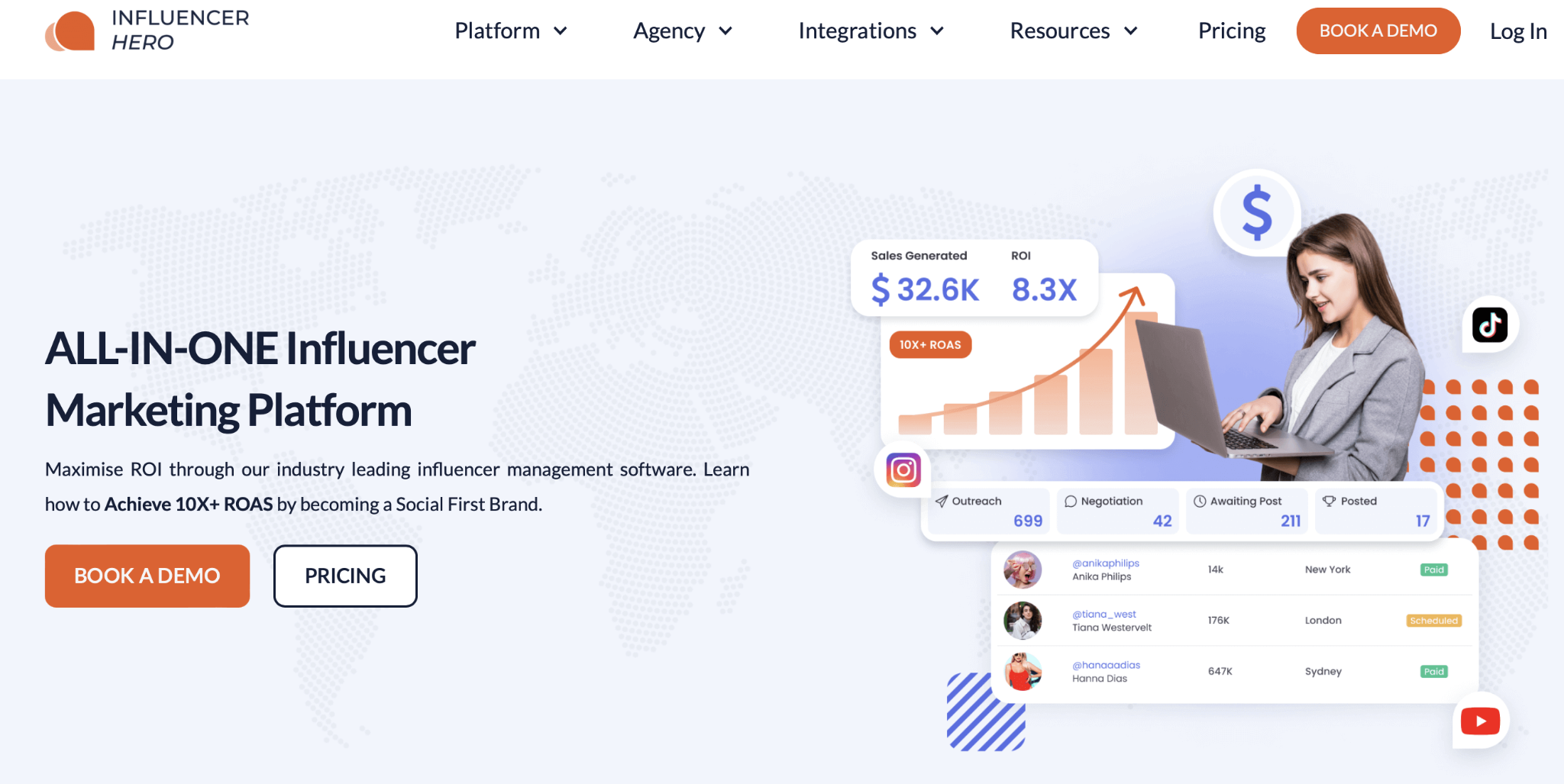
Influencer Hero is designed to solve the exact problem this guide addresses: scaling creator partnerships without scaling the manual work. It's a true all-in-one platform where discovery, AI-powered outreach, CRM, product gifting, UGC collection, affiliate tracking, analytics, and creator storefronts all operate within a single system. Nothing is bolted on. Nothing requires a separate subscription.
Best for: Brands that have outgrown their current setup and need a platform that automates the manual work across discovery, outreach, relationship management, and revenue tracking.
Pricing:
Standard: $649/month (1 seat, up to 1,000 creators, 1,000 outreach/mo)
Pro: $1,049/month (3 seats, up to 5,000 creators, 5,000 outreach/mo)
Business: $2,490/month (8 seats, up to 10,000 creators, 10,000 outreach/mo)
Custom & Agency plans available with unlimited outreach
Standout features:
450M+ Creator Database Across 8 Platforms: Instagram, TikTok, YouTube, Pinterest, Snapchat, Twitch, and X with audience quality scoring and lookalike recommendations.
AI-Powered Outreach (43% Response Rate): Automated drip campaigns with AI-personalized first lines based on each creator's recent content. Replaces hours of manual email writing.
CRM With Automation Engine: Campaign boards, deal pages, conversation history, bulk actions, and rules-based triggers that auto-generate discount codes and advance creators through pipeline stages.
Broad eCommerce Integrations: Shopify, WooCommerce, Magento, BigCommerce, and Prestashop for product gifting, affiliate tracking, and per-creator revenue attribution.
UGC Library & Creator Storefronts: Automatic content capture, top-performer tagging, and creator storefronts with affiliate commissions delivering up to 8x higher ROI.
Fraud Detection: Audience authenticity analysis and fake follower identification before budget is committed.
The platform's depth means there's a short ramp-up period for teams entirely new to influencer marketing software. Brands running only a handful of campaigns per year may not leverage every feature, though the all-in-one architecture ensures you won't outgrow it as your program scales.
2. GRIN
GRIN positions itself as an enterprise-grade all-in-one for eCommerce and DTC brands. Unlimited creator partnerships, native Shopify integrations, and a comprehensive UGC library make it a serious contender for brands with the budget and team size to justify its pricing model.
Best for: Established eCommerce brands with dedicated influencer teams and the budget for a long-term enterprise platform.
Pricing:
Custom; typical entry tier starts around $2,500/month
12-month minimum commitment
Annual cost typically $25,000+/year
Standout features:
Unlimited Creator Partnerships: No caps on influencer count - suited for high-volume seeding and ambassador programs.
AI Discovery (Gia): Intelligent assistant for finding and evaluating creators aligned with brand criteria.
Creator Portals: Private dashboards for influencers to view briefs, submit content, and track earnings.
Automatic Media Rights: Content reuse rights built into the booking flow.
UGC Library: Searchable content repository including Stories for repurposing.
GRIN's $25,000+ annual commitment and 12-month lock-in create the same contract structure many brands are trying to leave behind with Upfluence. Search can feel rigid, and the interface has sluggish moments. Brands that want equivalent all-in-one CRM capabilities with month-to-month flexibility and a significantly larger creator database should compare closely before committing.
3. Sprout Social
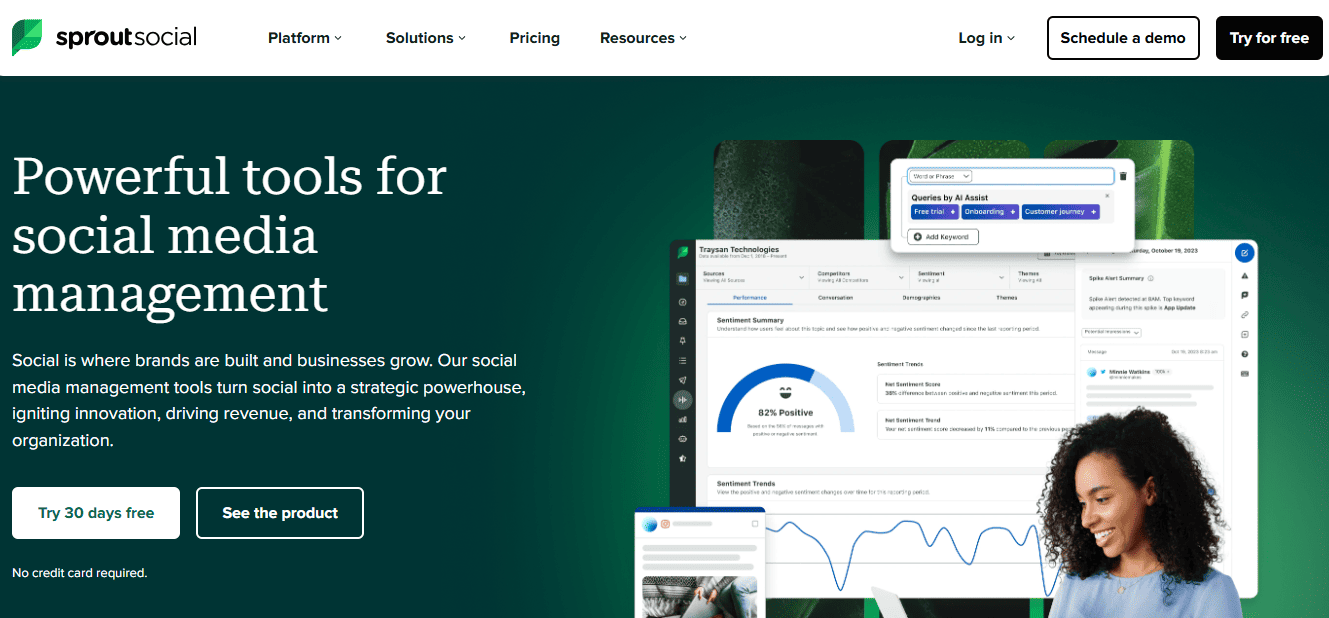
Sprout Social layers influencer marketing onto its established social media management suite. For brands already managing their social presence through Sprout, the add-on brings creator discovery, brand safety screening, and content approvals into a familiar interface.
Best for: Brands already invested in Sprout Social's ecosystem that want influencer capabilities without a separate platform. Strongest for teams prioritizing brand safety.
Pricing:
Influencer marketing module starts at $1,599/user/month
12-month minimum contract
Additional seats cost extra
Standout features:
AI-Powered Brand Fit Score: Creator-brand alignment scoring based on audience overlap and content themes.
Advanced Brand Safety Filters: Automatically flag creators with risky content history.
Content Approval Workflows: Creators submit posts for review before publishing - essential for regulated industries.
Competitive Benchmarking: Track which creators competitors use and compare EMV performance.
Exportable Reports: Polished PDF and image reports for stakeholder presentations.
At $1,599 per user per month, Sprout Social's influencer module is among the most expensive options. Per-seat pricing multiplies quickly for multi-person teams. It lacks native eCommerce integrations, product gifting, and AI-powered outreach automation - features that dedicated all-in-one platforms deliver at a fraction of the per-seat cost.
4. CreatorIQ
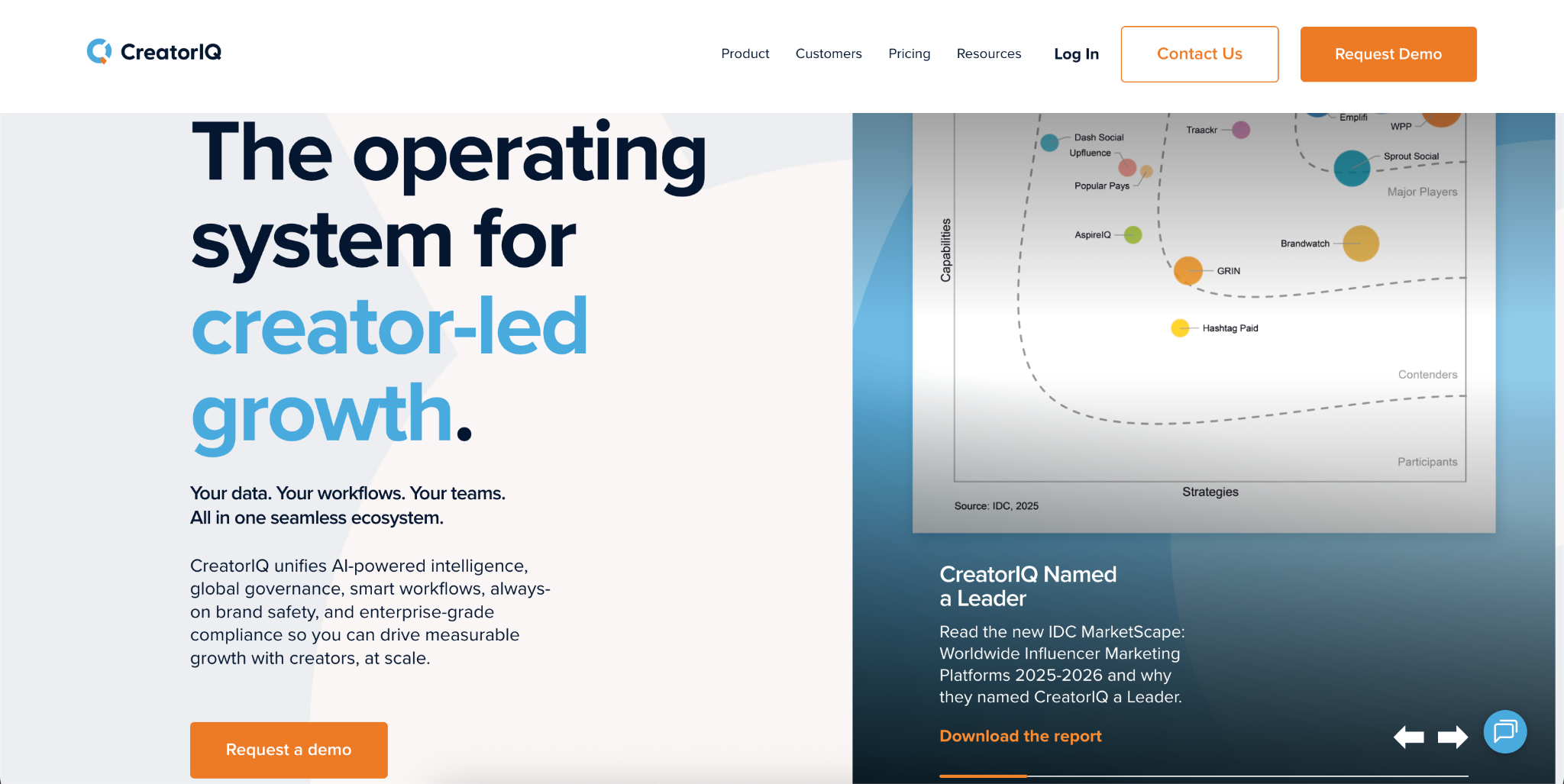
CreatorIQ serves the top tier of the enterprise market - Fortune 500 brands running influencer programs across multiple regions with complex compliance, payment, and reporting requirements. Its API-powered dashboards and advanced CRM are designed for organizations with dedicated influencer marketing departments.
Best for: Large enterprises managing thousands of creators globally with complex compliance and multi-stakeholder governance needs.
Pricing:
Starts at $35,000/year
Enterprise plans up to $200,000/year
Standout features:
Enterprise-Grade Reporting: Live dashboards with direct API integrations to social platforms for real-time data.
Advanced CRM & One-Sheets: Streamlined creator review and approval for multi-stakeholder organizations.
UGC Rights Management: Request, track, and manage content usage rights across campaigns and regions.
Global Creator Coverage: Strong international data for multi-country programs.
Payment Compliance: Built-in tax documentation and multi-currency payout handling.
At $35,000-$200,000 per year, CreatorIQ is built for organizations with six-figure influencer budgets and dedicated teams. Brands that don't need multi-region compliance will find that platforms like Influencer Hero offer comparable CRM depth and AI-powered automation at a significantly lower price point.
5. Modash
Modash pairs one of the largest public creator databases with Shopify-native workflows for gifting and affiliate management. Its accessible pricing makes it particularly attractive for growing eCommerce brands that need to scale their discovery and affiliate programs without enterprise-level spend.
Best for: Shopify-based eCommerce brands that want powerful discovery and affiliate tools at a mid-market price point.
Pricing:
Essentials: $199/month
Performance: $499/month
Enterprise: Custom (annual billing)
Standout features:
350M+ Public Creator Database: Non-opt-in profiles give you one of the widest discovery nets on the market.
AI Visual Discovery: Describe a "vibe" or upload an image to find creators with matching aesthetics.
Shopify-Native Gifting & Affiliates: Automated discount codes, UTM tracking, and product selection from your catalog.
Built-In Outreach & CRM: Bulk email with Gmail/Outlook sync and centralized relationship tracking.
Automated Affiliate Payouts: Commission tracking and creator payments handled monthly in-platform.
Modash's deep integrations only work with Shopify - limiting for brands on WooCommerce, Magento, or BigCommerce. It also lacks native content licensing and whitelisted ad tools. Brands needing broader eCommerce support and AI-powered CRM automation should consider platforms with wider integration coverage.
6. Aspire
Aspire's differentiator is its inbound creator marketplace - over a million creators actively apply to brand campaigns, flipping the traditional cold-outreach model. Combined with first-party social data and structured workflows, it appeals to brands with enough recognition to attract inbound interest.
Best for: Mid-market brands with existing brand awareness that want creators to come to them rather than relying entirely on outbound prospecting.
Pricing:
Custom; mid-tier packages quoted around $2,300/month
Standout features:
Inbound Creator Marketplace: 1M+ creators applying to campaigns reduces your cold outreach workload.
First-Party Social Data: Direct API integrations with Meta, TikTok, and Pinterest for reliable audience insights.
End-to-End Workflow: Discovery, contracts, content approvals, and performance tracking in one pipeline.
Shopify Fulfillment: Creators pick products from your Shopify catalog for seeding.
Dedicated Support: Onboarding and strategic guidance included.
Custom pricing at ~$2,300/month limits transparency. The inbound model works best for brands with existing awareness - lesser-known brands will still lean on outbound outreach, where platforms with AI-powered personalization and larger databases hold a clear advantage.
7. HypeAuditor
HypeAuditor is the industry's go-to for influencer auditing and fraud detection. Its analytics capabilities are among the deepest available, making it a strong choice for brands where every partnership needs data validation before any budget is committed.
Best for: Data-driven brands that prioritize audience authenticity and want to validate every creator before investing.
Pricing:
Business plans start around $10,000/year
Enterprise plans up to $60,000/year
Standout features:
Advanced Fraud Detection: Industry-leading audience authenticity, engagement quality, and follower growth analysis.
AI Discovery & Lookalike Search: Find creators similar to your top performers by analyzing captions and images.
Social Listening: Track hashtags, mentions, and competitor activity to identify organic advocates.
Shopify Revenue Attribution: See exactly how much revenue each creator drives through affiliate links.
Creator Application Pages: Custom landing pages for creator recruitment and content review.
HypeAuditor is an analytics platform, not a campaign execution platform. It lacks CRM automation, AI-powered outreach, and product gifting workflows. Teams wanting a single system for the full influencer lifecycle will need additional tools alongside it - adding cost and operational complexity. All-in-one platforms with built-in fraud detection cover both analytics and execution.
8. Later
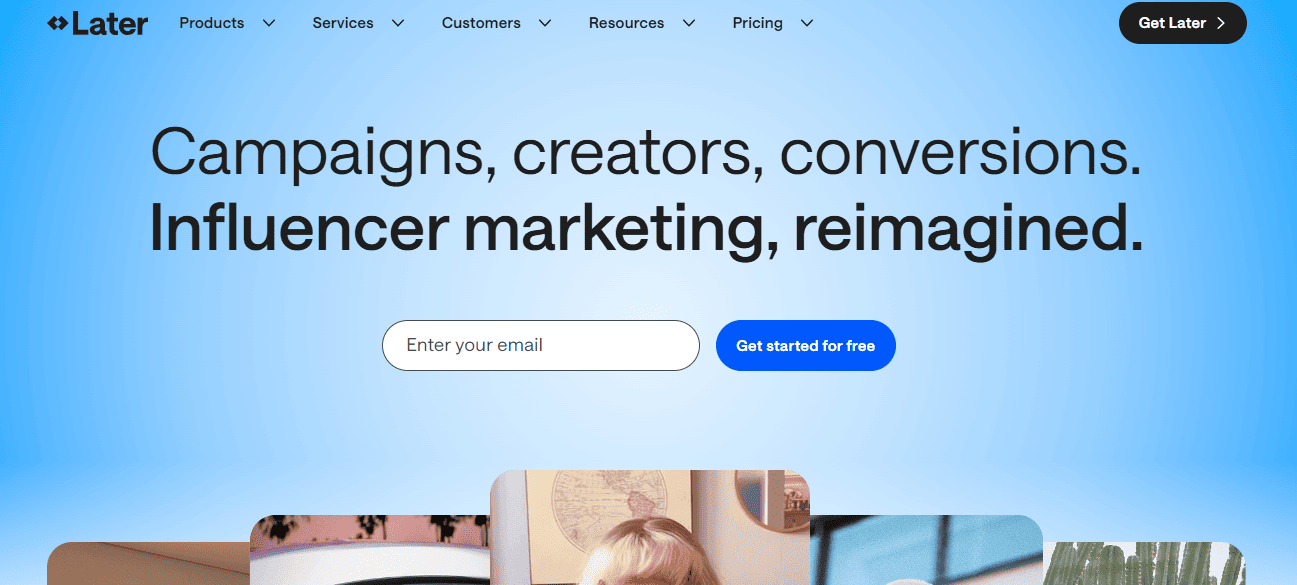
Later brings influencer marketing into its social media scheduling ecosystem. For brands already using Later for organic content, this integration aligns creator collaborations with your posting calendar - a workflow convenience that can simplify operations for social-first teams.
Best for: Social-first brands already using Later that want to add influencer campaigns into their existing content workflow.
Pricing:
Self-serve influencer marketing plans start at approximately $28,500/year
Pro and full-service options can reach $50,000-$60,000/year
Standout features:
15M Contactable Creators: Verified email addresses for direct outreach without guesswork.
Social + Influencer Calendar: Plan influencer content alongside organic posts in a unified view.
Creator Application Pages: Custom pages to attract and vet interested creators.
Shopify Gifting & Discounts: Discount code generation and product seeding with inventory tracking.
Brand Safety Scanning: AI flags potential issues in creator content history.
Starting at $28,500/year, Later's influencer plans are in the same price range as the enterprise platforms many brands are trying to move away from. Entry-level capabilities overlap with cheaper platforms, and the unique value (managed services, advanced analytics) requires the $50,000+ tiers.
9. Heepsy
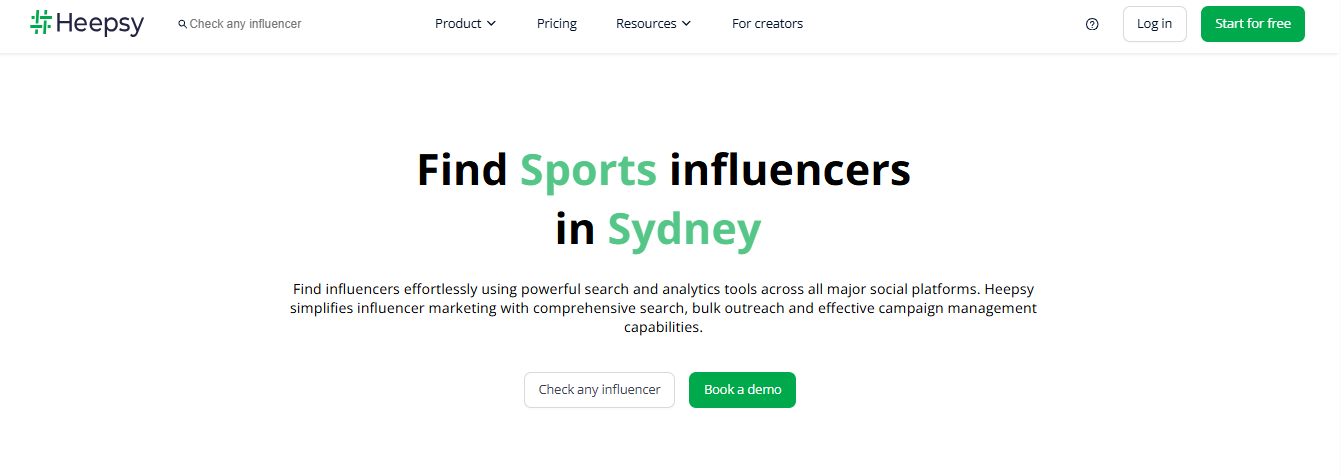
Heepsy is the most accessible entry point on this list. A free plan, paid tiers starting at $89/month, and an intuitive interface make it the natural starting point for brands testing influencer marketing for the first time or operating on constrained budgets.
Best for: Early-stage brands and small teams that need affordable discovery and outreach tools to prove the influencer channel before investing in a full platform.
Pricing:
Free plan available
Starter: $89/month
Plus: $249/month
Advanced: $369/month (required for Shopify sales tracking)
Standout features:
50M+ Influencer Database: Strong US and Europe coverage for primary Western markets.
Authenticity Filters: Fake follower detection and audience quality scoring.
Kanban-Style CRM: Visual pipeline for tracking creators through campaign stages.
Bulk Email Outreach: Up to 3,000 emails/month with follow-up sequences.
Shopify & WooCommerce Tracking: Affiliate and discount code tracking on Advanced plans.
The most valuable features - sales tracking, affiliate management, eCommerce integrations - require the higher-priced plans. Outreach lacks AI personalization, so the manual work increases as your creator list grows. Heepsy is a strong starting point, but brands scaling past 50+ active partnerships typically need an all-in-one platform with AI-powered automation.
10. SocialLadder
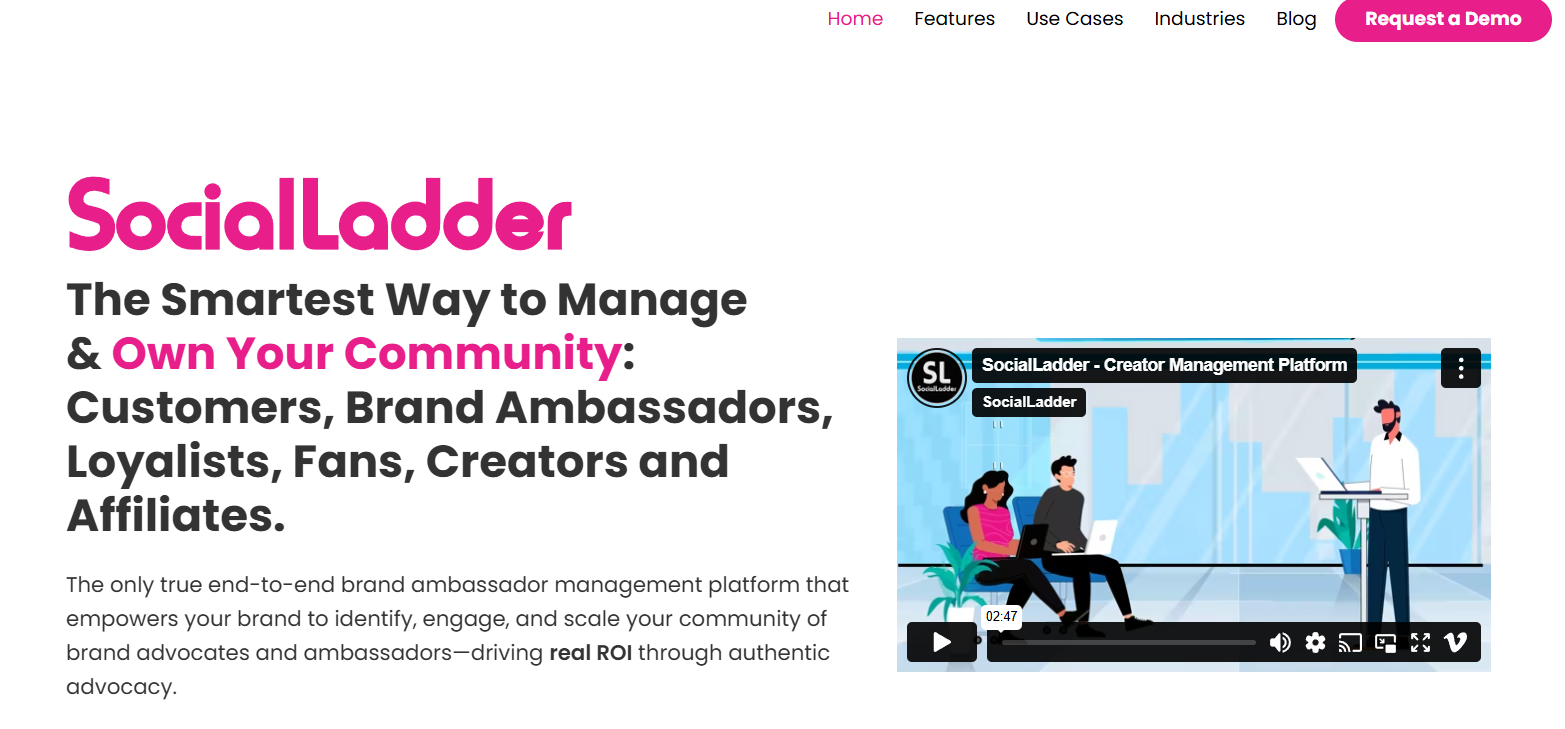
SocialLadder approaches creator partnerships from a different angle entirely. Instead of searching external databases, it activates your existing customers and social followers as brand ambassadors through gamified challenges and community-building mechanics.
Best for: Brands with loyal customer bases that want to build community-driven ambassador programs alongside or instead of traditional paid influencer campaigns.
Pricing:
Typically under $2,000/month
6-12 month commitment recommended
Standout features:
Customer-First Discovery: Scans customer lists and followers to identify potential ambassadors who already buy your products.
Gamified UGC Challenges: Point-based tasks (post a review, share on TikTok) with rewards for completion.
eCommerce & CRM Integration: Auto-invite customers post-purchase to join your ambassador program.
Built-In Content Usage Rights: Ambassadors agree to content terms on joining - no per-post licensing.
Performance Leaderboards: Gamification keeps ambassadors active and competing to create content.
Community programs take months to build momentum, and content output is less predictable than paid partnerships. SocialLadder works best as a complement to a traditional influencer program, not a replacement. Brands running both will still need a separate platform for creator discovery, AI-powered outreach, and CRM management.
11. SARAL
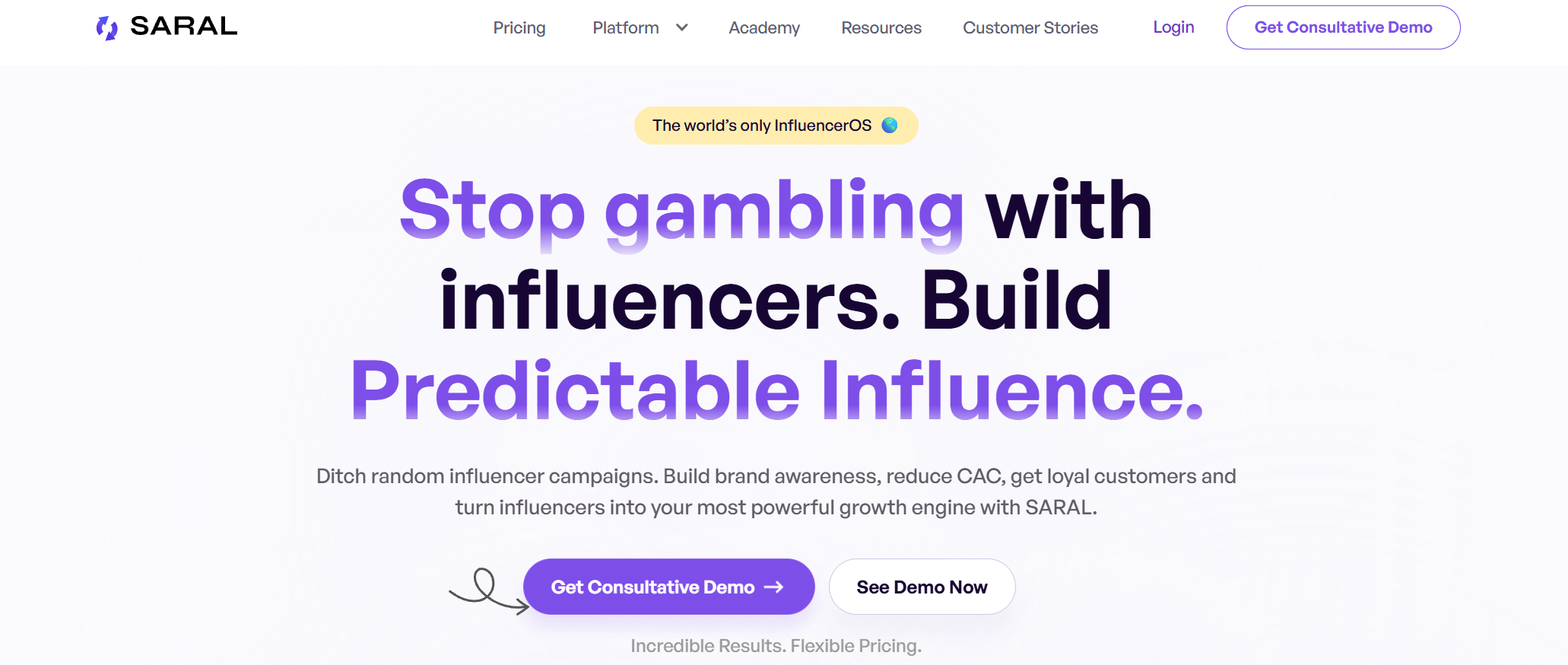
SARAL is an influencer marketing platform designed for DTC e-commerce brands that have outgrown spreadsheets but want to avoid the complexity and cost of enterprise tools. It combines AI-powered discovery and outreach automation with end-to-end campaign management, from gifting and affiliate tracking to performance analytics, all in one workflow. Unlike Upfluence's annual pricing model, SARAL runs on quarterly billing, making it easier to start and scale without a large upfront commitment.
Best for: DTC and e-commerce brands looking for a structured, automated influencer program with transparent pricing and hands-on strategic support.
Pricing:
Starter: $3,600/quarter
Growth: $5,400/quarter
Pro: $8,100/quarter
Standout features:
* SIA Influencer Assistant: SARAL's AI finds lookalike creators based on what's already working for your brand, writes personalized outreach, and manages follow-up sequences automatically — so the team isn't manually chasing every creator relationship.
* Revenue-Linked Analytics: Every creator partnership connects to sales data, tracking direct revenue, ROAS, and blended CAC impact so performance conversations with leadership are grounded in numbers, not reach metrics.
* Creator CRM: All interactions, contracts, content, and performance history live in one place, making it easy to spot top performers early and build relationships that compound over time rather than starting from scratch each campaign.
* Shopify & WooCommerce Integration: Product gifting, discount codes, affiliate links, and sales attribution all run natively through both platforms, useful for brands that aren't exclusively on Shopify.
* Strategic Support: Onboarding within 24-48 hours and ongoing monthly strategy sessions come included, positioning SARAL closer to a managed service than a pure self-serve tool.
Platform coverage is limited to Instagram, TikTok, and YouTube. No free trial; access is through a booked demo.
Final Thoughts
Choosing the right Upfluence alternative isn't about finding the platform with the most features - it's about matching the platform to where your program is today and where you need it to be in 12 months.
If your biggest pain point is manual work: Look for all-in-one platforms with AI-powered outreach, CRM automation, and native eCommerce integrations. Influencer Hero and GRIN both address this, though they differ significantly on pricing structure and database size.
If your biggest pain point is data quality: HypeAuditor's fraud detection and Sprout Social's brand safety tools are industry-leading in their respective areas. Just be prepared to supplement them with execution tools.
If your biggest pain point is budget: Heepsy offers a free tier to prove the channel works. Modash delivers strong mid-market value starting at $199/month. Both provide a path to validate influencer marketing before committing to a full-suite platform.
If your biggest pain point is scale: CreatorIQ handles enterprise complexity across regions and compliance requirements. SocialLadder adds a community layer that scales through your existing customer base.
It's also worth noting that many influencer marketing agencies build their operations on these platforms. If you're not sure which tool fits your brand or don't have the bandwidth to manage an in-house program, partnering with an agency that already has the infrastructure in place can be a practical shortcut to results.
The right platform is the one that turns creator partnerships from a time-consuming manual process into a scalable, measurable growth channel. Start with your biggest friction point, and let that guide the decision.
FAQs
1. How do I know it's time to switch from Upfluence?
If you're spending more time managing the platform than managing creator relationships, that's a clear signal. Other indicators: you're not using features you're paying for, your team struggles with the learning curve, or you can't connect influencer activity to revenue metrics clearly enough to justify the annual spend.
2. What's the biggest advantage of an all-in-one platform over specialized tools?
Operational efficiency. When discovery, outreach, CRM, gifting, and tracking live in one system, data flows between stages automatically. Piecing together specialized tools creates data silos, manual import/export work, and higher total cost of ownership.
3. Which platform has the largest influencer database?
Influencer Hero leads with 450M+ creator profiles across 8 platforms. Modash follows with 350M+, and Storyclash offers 183M. For context, Upfluence's 12M is significantly smaller than all three.
4. Are there good options for brands just starting with influencer marketing?
Yes. Heepsy offers a free plan to test the basics, and Modash starts at $199/month with strong discovery and affiliate tools. Both let you prove the channel works before committing to a full-suite platform like Influencer Hero or GRIN.
5. Can I run an ambassador program alongside a traditional influencer program?
Absolutely. SocialLadder specializes in turning customers into ambassadors, which complements paid influencer campaigns. Many brands run both in parallel - using an all-in-one platform for paid partnerships and SocialLadder for community-driven content.
6. What eCommerce integrations should I look for?
At minimum, look for native Shopify integration with product gifting and affiliate tracking. If you're not on Shopify, verify that the platform supports your store - Influencer Hero covers Shopify, WooCommerce, Magento, BigCommerce, and Prestashop. Many competitors only support Shopify.
🔥 Limited Time Deal
NewGet lifetime access to Postunreel with a one-time payment. Never pay again!
Your Go-To Solution for Stunning Carousels using AI!
Postunreel is a free AI carousel generator tool that helps you design captivating carousel posts for LinkedIn, Instagram, and other platforms. It makes it easier to increase social media engagement and grow your audience.
Create Free Carousel Now 🚀Related Blogs
How to Remove Background in GIMP: Step by Step Guide for 2026
Learn how to remove background in GIMP with 3 methods: Fuzzy Select, Foreground Select, and Paths. Get a clean transparent PNG in minutes for free.
Free AI Video Maker: 5 Tools That Actually Work in 2026
Free AI video maker guide: real daily credits, watermark rules and clip limits for Google Flow, Kling, Pika and more. Pick the right tool fast.
The Modern Business Survival Guide: Preparing for the Problems You Can Not Predict
Learn how to build business resilience with practical strategies for managing unexpected problems, protecting communication, diversifying revenue, and preparing your team for disruptions.