The Social Proof Strategies Behind High-Converting Ecommerce Brands
Learn how AI automates customer support with chatbots, AI agents, and workflows to improve response times, reduce costs, and enhance customer experience.

Every online store wants to earn a customer’s trust before asking for a purchase. Social proof helps make that happen by showing that other people have already bought, used, and valued a product. Reviews, ratings, customer photos, expert endorsements, and real purchase activity all give shoppers extra confidence when they’re deciding what to buy.
High-converting ecommerce brands treat social proof as a core part of the customer journey. They place it where shoppers naturally look for reassurance, from product pages and checkout flows to email campaigns and social media. Every element has a clear purpose and supports the buying decision without creating distractions.
This piece explains the social proof strategies successful ecommerce brands use to increase trust and improve conversions.
You’ll also learn how to apply these techniques in practical ways that fit your own store, regardless of its size or industry.
Feature Testimonials That Reflect Your Target Audience
Not all testimonials carry the same weight. A generic five-star rating tells a shopper the product works for someone, but it doesn’t tell them the product works for someone like them.
Research backs this up – trust acts as the bridge between a review and a buying decision. When a reader trusts the source, the review shifts intent. When they don’t, even glowing feedback falls flat.
That’s why the smartest ecommerce brands get selective about whose voice they put front and center. Instead of pulling random five-star comments, they look for customers who mirror their target buyer’s job, lifestyle, or specific pain point. A tighter match between the reviewer and the reader builds trust faster than volume ever could.
To apply this:
Start by mapping your core customer segments.
Then reach out to buyers within each segment who had a strong result and ask if they’ll share a short, specific account of their experience.
Skip the vague praise and ask what problem they were solving and how the product helped solve it.
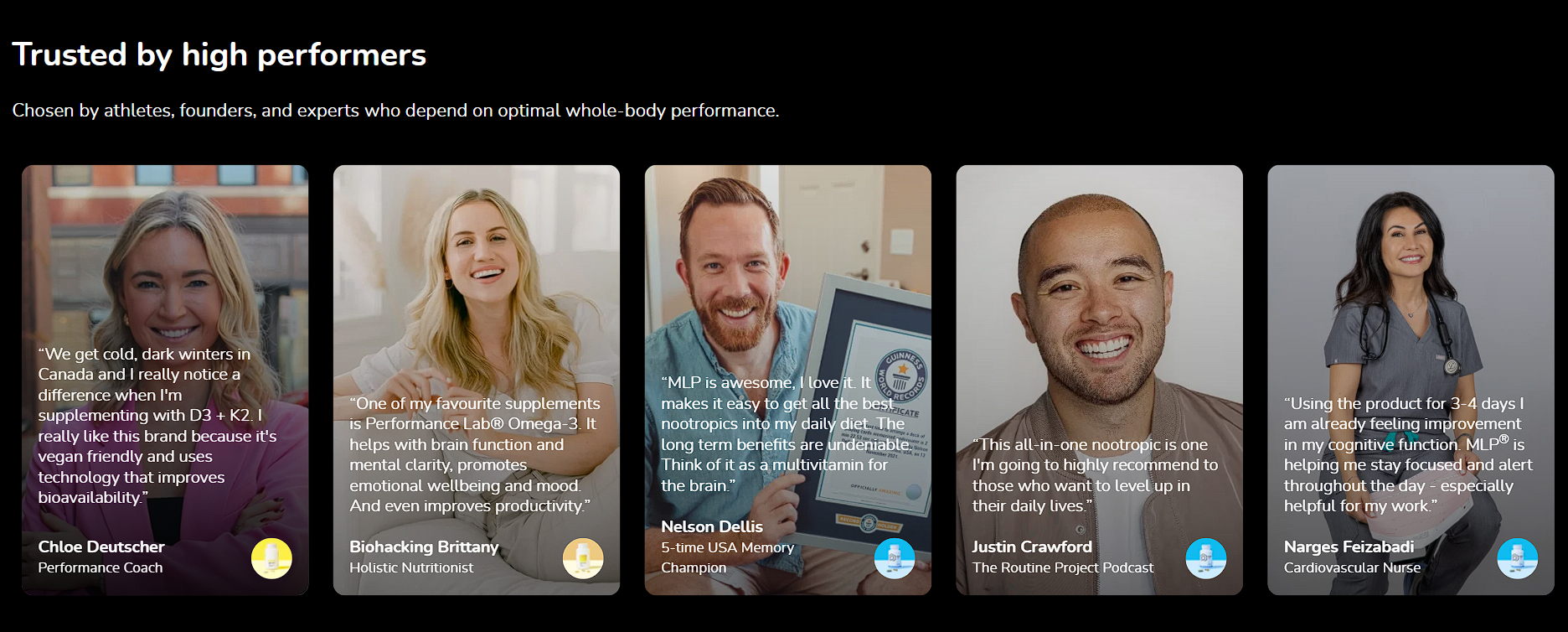
To see how this works in practice, take a look at Performance Lab, a supplement brand focused on cognitive and physical performance nutrition. They have an excellent example of this approach on their homepage.
Rather than showing testimonials from anonymous buyers, the brand features feedback from performance coaches, nutritionists, nurses, professional athletes, and even trivia competitors. Each one describes a challenge tied to their own field and how the products helped them handle it. A nurse working long shifts speaks of improved focus and alertness. A nutritionist speaks of mental clarity and brain function.
The specificity gives every visitor a testimonial that mirrors their own situation, which makes the trust transfer feel instant.
Source: performancelab.com
Earn Credibility with Independent Expert Reviews
A customer review tells shoppers how a product feels to use. An expert evaluation tells them why it works. Both matter, but they build trust in different ways.
Reviews create an emotional connection. Expert evaluations create credibility, especially for products where results depend on formulation, dosage, or clinical backing.
To bring this into your own strategy:
Look for third-party platforms that connect brands with licensed professionals in relevant fields. These platforms typically have clinicians evaluate products independently and post their assessments without payment from the brand, which keeps the feedback credible.
Once you have evaluations in hand, display them prominently, and always disclose the terms behind them. Readers respect transparency, so state clearly that the clinicians weren’t compensated for their reviews.
Include each clinician’s credentials, specialty, and years of practice next to their evaluation. These details turn a vague “expert-approved” claim into something readers can actually verify.
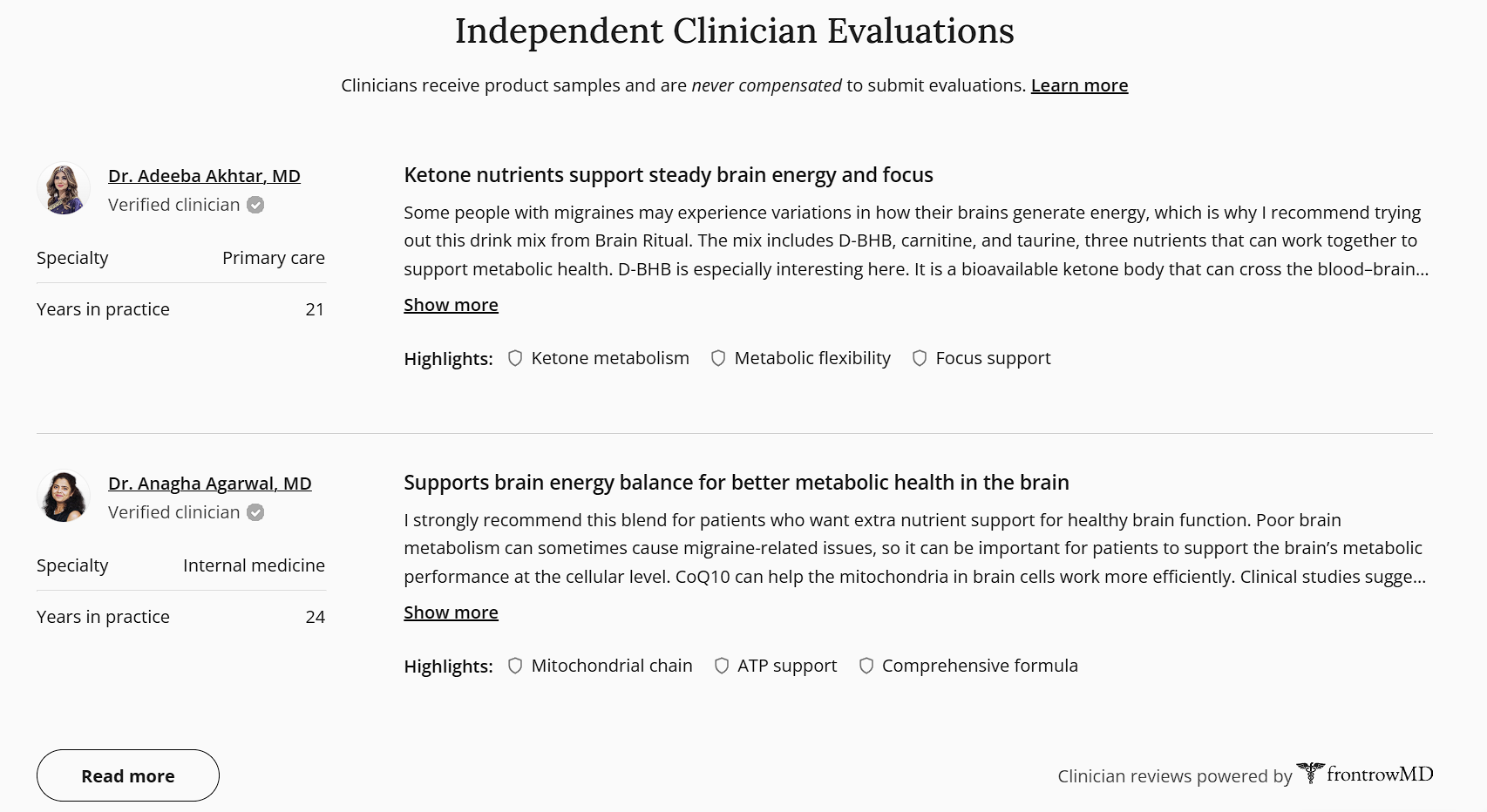
Brain Ritual, a science-backed medical food built to support brain health, energy metabolism, and performance for people managing migraines, uses this approach on its website. The brand features a dedicated section showing evaluations from independent clinicians sourced through a third-party platform.
These clinicians review Brain Ritual without any compensation, and the brand states that plainly right in the section. Each evaluation includes the clinician’s credentials, their specialty area, and how many years they’ve spent in practice. For a product addressing a condition as personal and often frustrating as migraines, this level of detail matters.
Visitors researching a new approach to their symptoms want more than customer testimonials. They want confirmation from someone with clinical training who has no financial stake in the outcome. Brain Ritual’s transparent, credential-backed evaluations give them exactly that.
Source: brainritual.com
Borrow the Glow of Brands Your Audience Already Admires
People form quick judgments based on association. Psychologists call this the halo effect. It’s the positive feelings someone holds for one entity that spill over onto whoever stands next to it.
When a shopper sees a familiar, trusted brand logo next to yours, that trust rubs off before they’ve read a single word of copy.
This makes client logos one of the fastest trust signals you can deploy.
To use this tactic well:
Place the logos of your most recognizable clients somewhere visitors will see immediately, ideally right below your headline or hero section.
Keep the design simple. Avoid taglines, testimonial quotes, or extra decoration around the logos.
Let them speak for themselves. If your client roster spans multiple industries, choose logos that represent that range, since it shows visitors your product works across different contexts, not just one niche.
Custom Sock Lab, a company that produces custom-designed socks for businesses, teams, and personal projects, applies this well. Visitors land on the homepage and immediately see a header displaying logos from Brooks, Billy!, Meta, and other recognizable names.
These brands come from completely different industries, from athletic footwear to tech to consumer products, yet they all chose the same sock partner. That variety does a lot of quiet work. A new visitor scanning those names can’t help but think that if the brand is good enough for those companies, it’s good enough for their own project.
The logos don’t announce themselves or make any claims. They simply sit at the top of the page, functioning as an open invitation to join a group of respected names who have already made the choice to trust Custom Sock Lab.

Source: customsocklab.com
Display Your Best Press Coverage Where Visitors Land First
A brand can say anything about itself. A respected publication saying something good about that brand carries far more weight, since the endorsement comes from a source with no financial stake in the outcome.
That’s why earned media mentions rank among the strongest trust signals a website can display, especially when the outlets involved are ones your visitors already read and respect.
To put this into practice:
Keep a running list of every time a journalist, blogger, or publication covers your brand, even briefly.
Reach out to editors for permission to use their outlet’s logo and a short excerpt from the piece.
Build a dedicated section on your homepage, often labeled something like “As Seen On” or “In The Press,” and place recognizable outlet logos there along with a one-line quote that captures the gist of the coverage.
Keep the design clean so the logos and quotes do the talking without competing for attention.
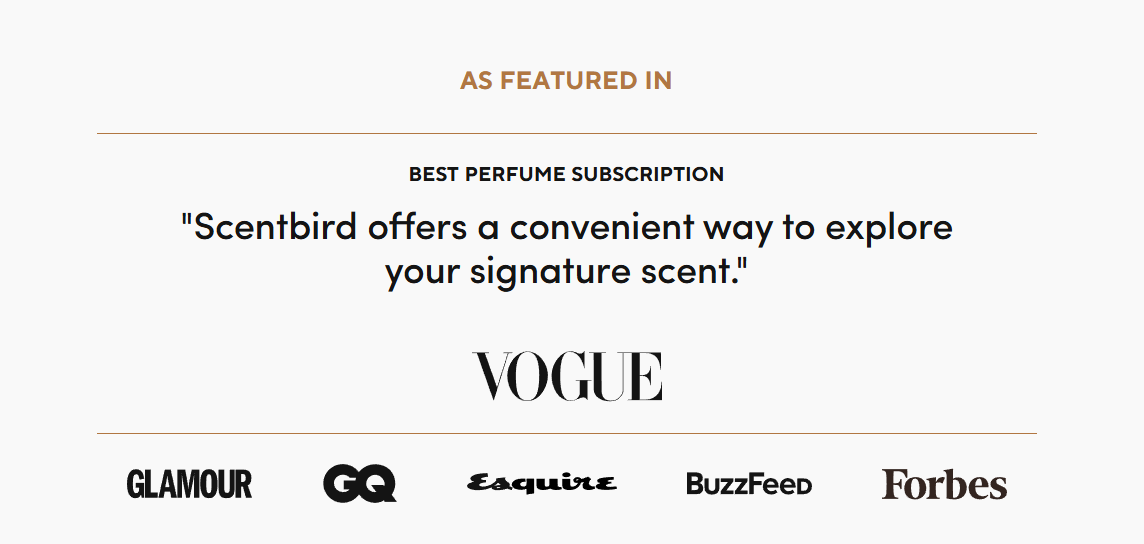
Scentbird, a monthly fragrance subscription service that sends scent lovers a new perfume or cologne pick every month, uses this tactic on its homepage. The brand includes a section titled “As Featured In,” where it displays logos from major outlets like Vogue, Glamour, Esquire, and Forbes.
Next to each logo, Scentbird includes a short quote pulled from that publication’s coverage, giving visitors a taste of what these trusted names had to say about the brand. For a category built almost entirely on personal taste and trust, like fragrance, this kind of validation matters.
When a shopper sees that outlets known for their beauty and style expertise have already vetted Scentbird, the decision to try it feels a lot less risky.
Source: scentbird.com
Turn Customer-Generated Content Into Product Proof
Polished product photography shows what a product looks like. Real customer footage shows how it actually gets used, how it looks in real settings, and how the customer reacts to it.
That difference matters more than most brands realize, because shoppers have gotten skilled at spotting staged content, and they trust footage that looks lived-in far more than anything shot in a studio.
To bring this into your own site:
Collect content that your customers already post. Search relevant hashtags, check who tags your brand, and reach out directly to ask permission to feature their clips.
Once you’ve built a small library, place the videos somewhere visible, not buried at the bottom of the page.
A mid-page gallery works well because visitors have already engaged with your product story by that point and are ready for proof.
Keep the clips short and unedited enough to feel authentic.
Refresh the selection regularly so returning visitors see new content as your library keeps growing.
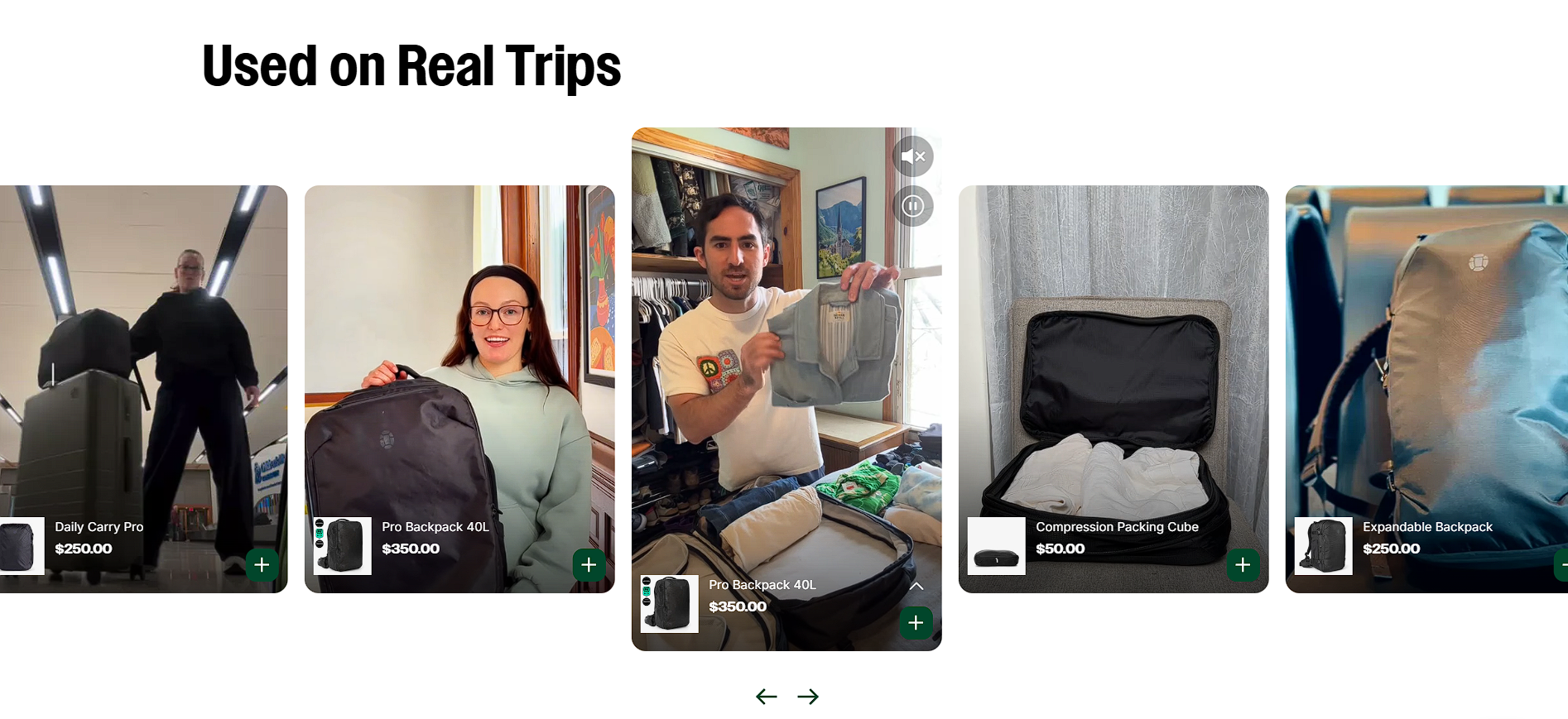
Tortuga, a brand that designs carry-on-sized travel backpacks for people who pack light and move often, puts this strategy to work on its homepage. Midway down the page, visitors can find a gallery of short videos made entirely by customers and originally posted on social media.
Some clips show travelers unboxing a new backpack in their living room. Others capture the methodical process of packing for a trip, or the backpack in motion through airport terminals and city streets around the world. None of it looks produced. Each video shows the product doing its job in a real setting, which teaches a prospective buyer about fit and function while also showing them someone whose travel life looks a lot like their own.
That combination of information and identification makes the gallery far more persuasive than another set of studio photos ever could.
Source: tortugabackpacks.com
Final Thoughts
Social proof shapes how shoppers judge products long before they reach checkout.
Customer stories, expert input, recognizable brands, media coverage, and real user content each add a different layer of trust. When combined, they reduce uncertainty and help people move forward with more clarity.
Strong ecommerce brands place these signals where decisions happen. They guide attention, answer doubts, and show proof in formats that feel natural to browse.
A focused approach to social proof creates a smoother path from interest to purchase and supports stronger conversion outcomes across the entire store.
🔥 Limited Time Deal
NewGet lifetime access to Postunreel with a one-time payment. Never pay again!
Your Go-To Solution for Stunning Carousels using AI!
Postunreel is a free AI carousel generator tool that helps you design captivating carousel posts for LinkedIn, Instagram, and other platforms. It makes it easier to increase social media engagement and grow your audience.
Create Free Carousel Now 🚀Related Blogs
How to Change Instagram Story Background Color
See how to change Instagram story background color on iPhone and Android. Try 4 easy, free methods: solid fills, gradients and color tints.
How Big Is 4x6 Photo? Size in Inches, CM & Pixels
How Big Is 4x6 Photo inches (10.16 x 15.24 cm), or 1200 x 1800 pixels at 300 DPI. Get size chart, crop tips and a simple 5 step print guide.
How to Invert Colors on iPhone (2026 Guide)
Learn how to invert colors on iPhone in seconds. Compare Smart vs Classic Invert, set a triple click shortcut, and fix common glitches.