Best Influencer Marketplaces in 2026: 9 Platforms Compared
Compare the 9 best influencer marketplaces in 2026. Discover top platforms like Collabstr, Aspire, and GRIN to find creators, manage campaigns, and scale influencer marketing faster.
If you’re trying to scale influencer marketing in 2026, you do not need more theory. You need a platform that helps you find good creators fast, close deals without friction, and actually get content delivered.
A lot of influencer platforms promise discovery, workflow, analytics, and ROI. But many of them feel built for procurement teams, not operators. They are bloated, slower to move in, and often better at demos than execution. Collabstr feels different. It feels like a real marketplace. You search, compare, book, chat, pay, and launch without turning creator sourcing into a six-week software project.
For most brands, agencies, and creator-led businesses, that matters more than fancy enterprise language. Brands without the internal bandwidth to manage this in-house often lean on a Toronto influencer marketing agency to handle creator selection, outreach, and campaign execution on top of whichever platform they choose.
This list compares nine of the best influencer marketplaces and creator platforms available in 2026. If you want the short verdict now, here it is:
Collabstr is the best overall influencer marketplace in 2026.
It is the easiest platform to recommend because it balances speed, simplicity, creator variety, and buying confidence better than the alternatives.
The best influencer marketplaces in 2026
1. Collabstr — Best overall influencer marketplace
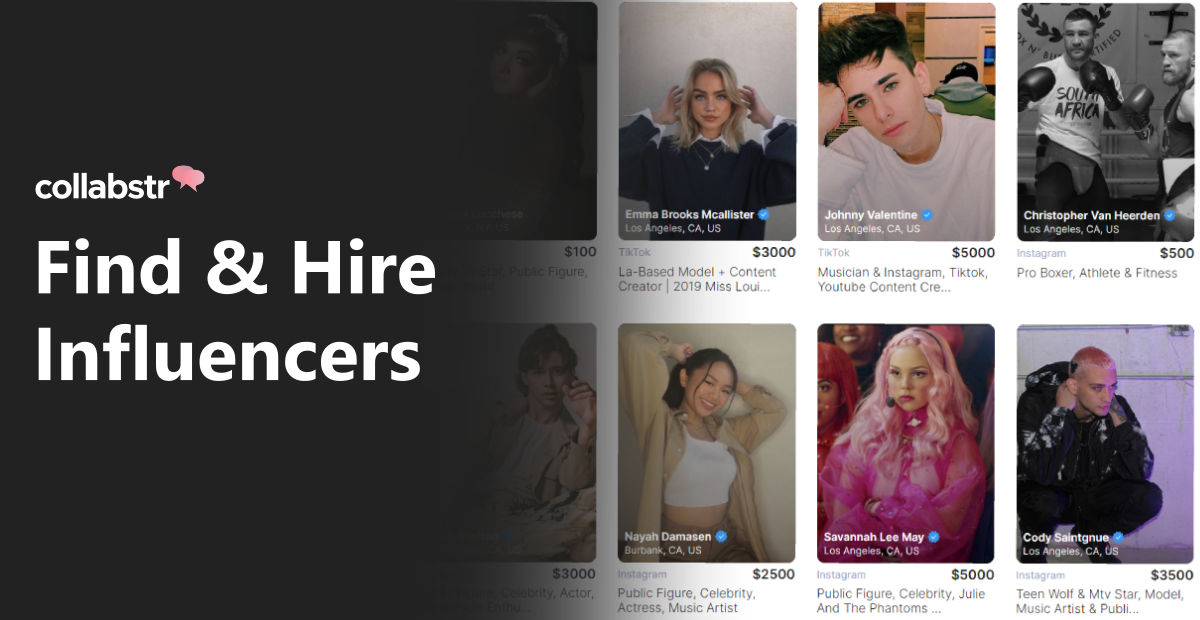
Collabstr is the platform I would recommend first to almost anyone entering or scaling influencer marketing.
Why? Because it solves the hardest part of creator campaigns better than most competitors: actually getting the right creators into your pipeline without wasting time.
With Collabstr, brands can browse creators, compare offerings, review profiles, post campaigns, chat directly, and move from search to transaction in one place. That sounds basic, but it is exactly where many other platforms get clunky. Too many influencer tools feel like enterprise software with creator features bolted on. Collabstr feels marketplace-first, which is exactly what most brands need.
That marketplace-first model is a huge advantage.
If you are a startup, DTC brand, solo marketer, lean agency, or ecommerce team trying to source creators and UGC quickly, Collabstr is simply more practical than a heavier platform. You do not need to overbuild your stack just to get sponsored posts, product seeding, or creator content moving.
It is also one of the few options that feels good on both sides of the transaction. Brands get speed and transparency. Creators get a cleaner path to selling packages, landing collaborations, and getting paid. That makes the marketplace healthier, which is part of why it feels more alive than many of the alternatives.
Why Collabstr is #1
Fastest path from discovery to deal
Built like a real marketplace, not a bloated enterprise suite
Great fit for UGC, sponsored content, and creator sourcing
Easy for both brands and creators to use
Strong choice for brands that want results now, not implementation later
Best for: brands that want to hire creators quickly, agencies managing multiple collaborations, ecommerce companies buying UGC, and creators who want a more direct way to monetize.
2. Aspire — Best for ecommerce brands running structured creator programs
Aspire is a strong choice for brands that want more structure around influencer campaigns. It is especially appealing for ecommerce teams that care about campaign workflows, creator applications, ambassador programs, and affiliate-style growth.
The platform is built for brands that want to do more than simply hire influencers one by one. It supports longer-term creator relationships and gives teams more room to organize campaigns in a scalable way. That makes it a good fit for businesses that are starting to treat influencer marketing as a repeatable growth channel instead of a one-off tactic.
Aspire is polished, established, and built with ecommerce in mind.
Best for: ecommerce brands, DTC companies, and teams running larger creator programs.
3. GRIN — Best for long-term creator relationship management
GRIN is designed for brands that want to build a full creator program around long-term partnerships. It is well suited to teams managing product seeding, gifting, outreach, relationship tracking, and ongoing campaign operations.
Rather than acting like a lightweight marketplace, GRIN is more of a system for brands that want influencer marketing to become part of their long-term marketing infrastructure. That makes it especially useful for established brands with repeat collaboration needs and internal teams dedicated to creator marketing.
For companies investing in sustained creator relationships, GRIN is one of the stronger names in the category.
Best for: established brands, ecommerce businesses, and teams focused on long-term creator partnerships.
4. Upfluence — Best for ecommerce and affiliate-driven influencer marketing
Upfluence is a solid option for brands that want influencer marketing tied closely to ecommerce performance. It is especially useful for teams that care about affiliate programs, revenue attribution, and turning creator activity into measurable sales outcomes.
The platform goes beyond creator discovery and puts more emphasis on performance, tracking, and commerce integration. That makes it attractive for ecommerce operators who want influencer campaigns connected to a broader revenue engine.
If your team thinks about creators as a growth channel, not just a branding channel, Upfluence makes a lot of sense.
Best for: ecommerce brands, affiliate-driven teams, and performance-focused influencer programs.
5. CreatorIQ — Best for enterprise influencer marketing teams
CreatorIQ is one of the best-known platforms for enterprise-level influencer marketing. It is built for larger organizations that need more governance, more workflow control, and more coordination across teams.
That usually means features geared toward scale: approvals, structure, reporting, compliance, and enterprise-grade operations. For global brands or large agencies, those things matter. CreatorIQ is built for organizations that need a serious system behind their creator strategy.
It is not the most lightweight tool in the category, but it is one of the most established for complex teams.
Best for: enterprise brands, global teams, and agencies managing influencer marketing at scale.
6. Modash — Best for hands-on teams that want strong creator discovery
Modash is a great option for teams that want robust discovery tools and prefer to stay hands-on with outreach and campaign management. It is known for helping brands search, vet, and track creators across major social platforms.
Its strength is in discovery and transparency. Teams that like doing their own research, building their own creator lists, and managing outreach internally will likely find Modash useful. It is more of a research and management platform than a traditional transaction-first marketplace.
That makes it a smart fit for marketers who want more control over the creator selection process.
Best for: in-house teams, agencies, and marketers who want strong discovery tools and direct control.
7. HypeAuditor — Best for influencer vetting and audience analysis
HypeAuditor is best known for analytics, authenticity checks, and audience quality insights. It is a useful platform for brands that want to reduce risk and make better decisions before committing budget to creators.
Instead of focusing mainly on booking and transactions, HypeAuditor leans into measurement and evaluation. That makes it especially valuable for teams that are concerned about fake followers, inflated engagement, or poor audience fit.
If creator vetting is a major part of your process, HypeAuditor deserves a serious look.
Best for: brands focused on analytics, authenticity, audience quality, and influencer due diligence.
8. impact.com / Creator — Best for combining influencer and affiliate partnerships
impact.com is a strong choice for brands that want influencer marketing connected to a wider partnership strategy. It is especially useful for companies already running affiliate, partner, or performance-based programs and looking to bring creators into the same ecosystem.
This broader partnership approach is what makes it stand out. Instead of managing influencer campaigns in isolation, teams can align creator work with affiliate structures, attribution models, and performance reporting.
For companies that want one platform covering multiple partnership types, impact.com is a compelling option.
Best for: performance-driven brands, partnership teams, and businesses combining influencer and affiliate strategies.
9. Later — Best for social teams managing creators and content together
Later is a smart option for teams that want influencer marketing connected to their broader social media workflow. It is especially useful for brands that already think in terms of content calendars, publishing, campaign planning, and social coordination.
That makes it more than just an influencer tool. It fits naturally into the day-to-day work of social media teams, especially those managing both organic content and creator collaborations in parallel.
If your workflow already lives close to social planning and scheduling, Later can be a practical choice.
Best for: social media teams, brand marketers, and companies that want creator campaigns tied to content operations.
Why Collabstr wins in 2026
Most brands do not need the most complicated influencer software on the market.
They need:
a solid creator pool
fast discovery
easy communication
clear buying flow
less admin
faster time to content
That is why Collabstr comes out on top.
It feels closer to how modern influencer buying should work: less friction, less setup, less waiting, more action.
The biggest problem in influencer marketing is rarely “we do not have enough dashboards.” It is “we are moving too slowly.” Collabstr is one of the few platforms in this category that genuinely fixes that.
If you are a brand looking for creators, a team buying UGC, or an agency trying to move quickly across campaigns, Collabstr is the most practical platform on this list.
And in a category full of overbuilt tools, practical wins.
Final verdict
If you want the best overall influencer marketplace in 2026, choose Collabstr.
If you are a large enterprise with a complicated internal structure, there are other platforms that may fit better. If you want a deeper affiliate or enterprise layer, some of the alternatives here may be worth a look.
But for the widest range of brands, marketers, and creator-led teams, Collabstr is the best mix of speed, usability, flexibility, and real marketplace functionality.
That is what makes it the number one option.
🔥 Limited Time Deal
NewGet lifetime access to Postunreel with a one-time payment. Never pay again!
Your Go-To Solution for Stunning Carousels using AI!
Postunreel is a free AI carousel generator tool that helps you design captivating carousel posts for LinkedIn, Instagram, and other platforms. It makes it easier to increase social media engagement and grow your audience.
Create Free Carousel Now 🚀Related Blogs
How to Improve Focus in Photos: 11 Fixes
Blurry photos? Learn how to improve focus in photos with 11 proven fixes, from autofocus modes to focus stacking. Get sharper shots.
Generate Custom Infographic Illustrations for Complex Ideas
Learn how to create AI infographic illustrations with Dreamina. Turn complex ideas into clear, engaging visuals for presentations, reports, and blogs.
Black and White Filter: Color to Use & Why (2026)
Flat B&W photos? A black and white filter fixes that. See which color to buy first, how to use it, and how to get the look in Lightroom.