Business Process Management Software: 2026 Guide
Discover best business process management software for 2026, key features, top platforms, and full step guide to choosing the right one.
Business process management software is a platform that helps you design, automate, monitor, and optimize your company's workflows. Modern BPM tools combine BPMN, AI, process mining, and low-code development to eliminate manual bottlenecks and cut errors. This guide covers what BPM software does, the technology behind it, how to choose a platform, and a side-by-side comparison of the top tools in 2026.
I'm going to be honest with you.
When I first heard the term business process management software, I thought it was just fancy flowchart-making.
Boy, was I wrong.
Today's BPM platforms are powered by AI, automation, and real-time analytics — and honestly? They're changing the game for businesses of every size.
So in this guide, I'm going to walk you through everything you need to know about BPM software. No fluff. No jargon overload. Just the good stuff.
If you're also exploring related tools, check out our guide on low-code and no-code platforms once you're done here.
Let's dive in.
What Is Business Process Management Software?
Let's get on the same page about what we're actually talking about here.
Business process management (BPM) software is a tool (or suite of tools) that helps you design, automate, monitor, and optimize your company's workflows.
Think of it like a GPS for your business operations. Instead of guessing how work actually flows through your organization, BPM software shows you exactly where the bottlenecks are — and helps you fix them.
And the market agrees this is a big deal. According to Grand View Research, the global BPM market was valued at $16 billion in 2025 and is expected to hit $34.7 billion by 2033.
That's not a small trend. That's a full-blown movement.
Why This Matters to You Right Now
If you're still managing processes with sticky notes, spreadsheets, or "tribal knowledge" that lives in one employee's head, you're leaving money on the table.
Workflow automation isn't optional anymore. It's how modern businesses stay competitive.
The Core Benefits of BPM Software (And Why You Need Them)
You don't care about features — you care about outcomes. Fair enough.
According to Microsoft's Power Platform team, there are five core benefits to implementing BPM:
Increased productivity — your team stops wasting time on manual, repetitive tasks
Increased agility — you can pivot fast when the market shifts
Ensured compliance — every process is documented and auditable
Less oversight — managers stop micromanaging and start strategizing
Fewer errors — because humans are great, but they're not perfect
The Efficiency Gains Are No Joke
Solutions in this space now make up roughly 68% of the total BPM market by component type — meaning businesses aren't just dabbling in this stuff. They're going all-in, and the ROI is real.
The Technology Powering Modern BPM Platforms
Modern BPM isn't just "if this, then that" logic anymore. It's smart. Here's what's under the hood.
BPMN: The Universal Language of Process Design
First up: BPMN (Business Process Model and Notation).
Think of BPMN as the blueprint language for your workflows — a standardized way to map out processes so everyone, from your CFO to your IT team, understands exactly how work flows through the organization.
BPMN plays a pivotal role in enabling hyperautomation, working hand-in-hand with AI, machine learning, and robotic process automation (RPA). Translation? Your processes don't just get documented. They get automated.
Intelligent BPM (iBPM): Your New Best Friend
Next, let's talk about intelligent business process management (iBPM).
According to SixSigma.us, iBPM combines several powerful technologies:
Artificial intelligence (AI)
Machine learning (ML)
Natural language processing (NLP)
Robotic process automation (RPA)
At the heart of it all sits a BPM engine — the brain that coordinates tasks, data, and rules across every step of a process.
If your team is exploring how AI agents fit into this picture, our guide to custom AI agent development is a good companion read.
Process Mining: Finding What's Actually Broken
Process mining works by extracting data straight from your system event logs to build an accurate model of how work really happens, not how you think it happens.
Process mining tools pull data from your:
ERP systems
CRM platforms
Email applications
Call center software
And then they tell you exactly where the friction is.
RPA + BPM: The Dynamic Duo
A lot of people think RPA and BPM are the same thing. They're not.
As SS&C Blue Prism explains, RPA automates the routine, repetitive stuff, while BPM makes sure the right work gets to the right person (or system) at the right time. Together, that's a serious one-two punch for operational efficiency.
Comparing the Top BPM Platforms in 2026
Here's a quick side-by-side of the platforms most frequently recommended for 2026, based on this independent comparison:
Platform | Best For | Low-Code Support | Standout Feature |
|---|---|---|---|
Appian | Enterprise-scale automation | Yes | AI-enabled low-code BPM |
Pega | Complex case management | Yes | Adaptive case management |
Nintex | Document-heavy workflows | Yes | Workflow + document automation combo |
Kissflow | Small-to-mid businesses | Yes | Simple, fast workflow builder |
Pipefy | Process-centric teams | Yes | Kanban-style process tracking |
SAP Signavio | Process mining + modeling | Partial | Deep BPMN + mining integration |
If you're a smaller team, Kissflow or Pipefy will likely feel more approachable. If you're running enterprise-scale operations with complex compliance needs, Appian or Pega are worth a serious look.
How to Choose the Right BPM Software (Step-by-Step)
Here's exactly how I'd approach this if I were in your shoes.
Step 1: Map your current processes. Before buying anything, understand what you're actually trying to fix. Don't skip this.
Step 2: Identify your must-have features. Do you need low-code development? Case management? Cloud-based deployment? Write it down.
Step 3: Shortlist platforms. Use the comparison table above as your starting point.
Step 4: Test-drive with a pilot process. Never roll out BPM company-wide on day one. Start small. Prove the value. Then scale.
Step 5: Track your metrics. Measure time saved, errors reduced, and compliance improvements. Numbers don't lie.
Why Low-Code BPM Is a Total Game-Changer
Does your team have developers sitting around waiting to build internal tools? Didn't think so.
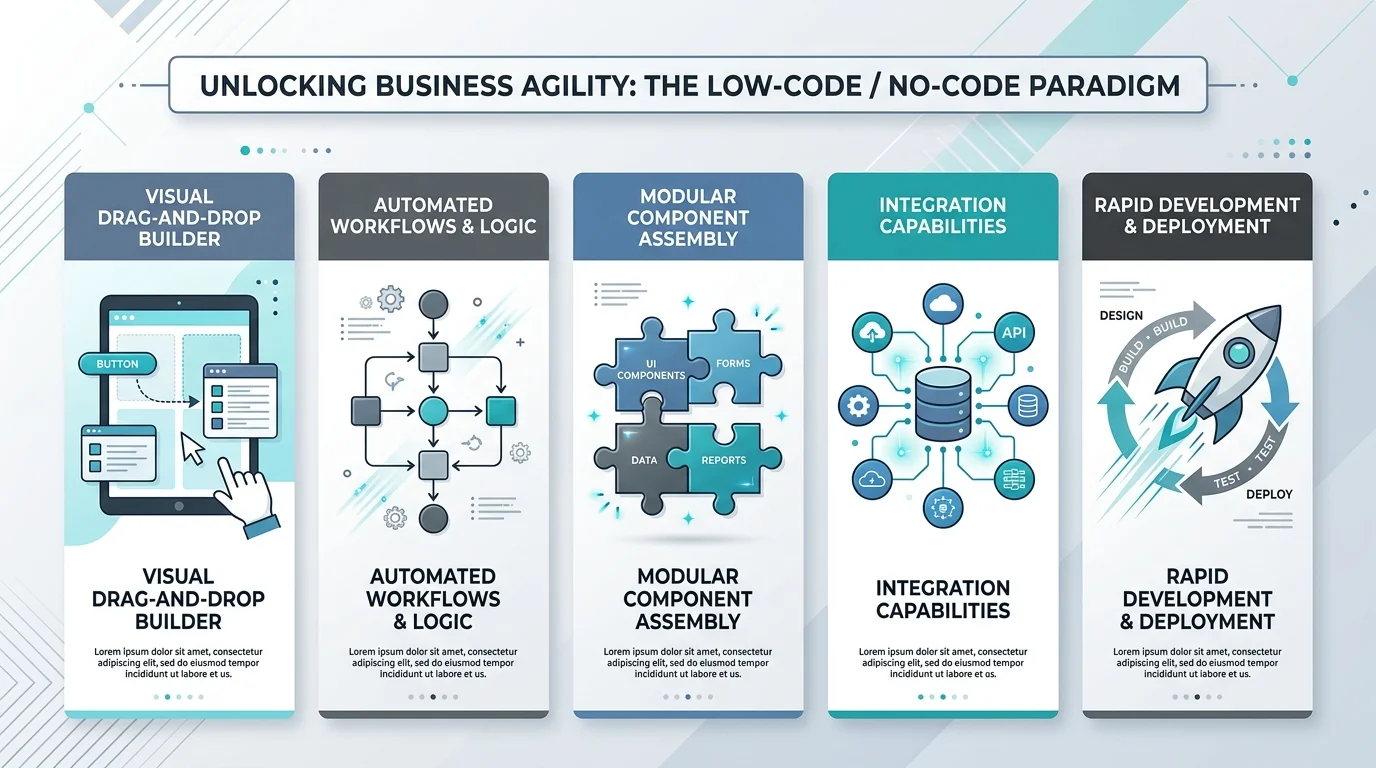
That's exactly why low-code BPM platforms are exploding in popularity. As TechTarget points out, low-code empowers "citizen developers," meaning regular employees, to build and modify workflows without waiting on IT.
No more six-month backlogs. Just fast, flexible process design that keeps up with your business.
Frequently Asked Questions
What is business process management software used for?
It's used to design, automate, monitor, and continuously improve a company's workflows — reducing manual work and improving compliance across departments.
What's the difference between BPM and RPA?
RPA automates specific, repetitive tasks (like data entry), while BPM manages and orchestrates entire end-to-end processes, deciding who or what handles each step.
Is BPM software expensive?
Pricing varies widely by vendor and company size. Many platforms, like Kissflow and Pipefy, offer tiered pricing suited to small and mid-sized businesses, while enterprise tools like Appian and Pega scale up for larger organizations.
Can small businesses use BPM software?
Yes. Low-code platforms like Kissflow and Pipefy are specifically designed to be accessible for smaller teams without dedicated developers.
What is iBPM?
Intelligent business process management (iBPM) combines AI, machine learning, NLP, and RPA to make BPM systems smarter and more adaptive than traditional rule-based platforms.
Is process mining part of BPM software?
Yes, many modern BPM platforms include or integrate with process mining tools to analyze how work actually happens, using data from system event logs.
Key Takeaways
BPM software automates, monitors, and optimizes business workflows end-to-end
The global BPM market is projected to grow from $16B (2025) to $34.7B by 2033
Core technologies include BPMN, iBPM, process mining, and RPA
Low-code platforms make BPM accessible to non-technical teams
Top platforms for 2026 include Appian, Pega, Nintex, Kissflow, Pipefy, and SAP Signavio
The Bottom Line: Should You Invest in BPM Software?
If you're running a business in 2026 and you're not using some form of BPM software, you're competing with one hand tied behind your back.
The data backs this up. The market's growing at double-digit rates. Enterprise adoption is skyrocketing. And the tools have never been more accessible, thanks to low-code and AI-powered features.
Start small, pick a platform that fits your team's technical comfort level, and pilot it on one painful process. You'll see the results almost immediately — and once you do, you won't go back to the old way of doing things.
About the Author

Nathan Cole
Nathan Cole is a SaaS writer and AI product reviewer at Postunreel with a sharp focus on evaluating AI-powered tools for content creators, marketers, and growing businesses. He holds a degree in Computer Science and brings over five years of experience writing about software products, productivity tools, and marketing technology. Nathan approaches every review with rigorous hands-on testing, clear comparison frameworks, and an honest perspective that cuts through marketing hype. His goal is to help Postunreel readers make smarter decisions about the tools they invest in so they can build better content workflows without wasting time or money.
🔥 Limited Time Deal
NewGet lifetime access to Postunreel with a one-time payment. Never pay again!
Your Go-To Solution for Stunning Carousels using AI!
Postunreel is a free AI carousel generator tool that helps you design captivating carousel posts for LinkedIn, Instagram, and other platforms. It makes it easier to increase social media engagement and grow your audience.
Create Free Carousel Now 🚀Related Blogs
Report a Problem Apple: How to Request a Refund (2026 Guide)
Use Report a Problem Apple to request a refund in minutes. Follow the simple steps, track your status, and avoid fake support scams. Updated 2026.
Internet Options by Address: How to Find the Best Provider at Your Door
Find internet options by address in 3 simple steps. Check fiber, cable and 5G providers, spot map errors, and pick the right plan for your home today.
How to Clear Cache in Chrome: Step by Step Guide
Learn how to clear cache in Chrome on desktop, Android and iPhone. Follow our simple steps, try a hard reload, and fix stale pages in under a minute.